Loading...
Join our Facebook Group: Join: Expats in Saudi Arabia
Loading...
If you are moving to Saudi Arabia with children, choosing the right school is one of the most important decisions you will make. The good news is that Saudi Arabia has a large and growing network of international schools, particularly in Riyadh, Jeddah, and the Eastern Province. This guide covers the education system, school types, curricula, costs, and practical enrollment advice for expat families.
Saudi Arabia's education system is divided into public schools (government-funded, Arabic instruction), private Saudi schools (Arabic-medium with some English), and international schools (English or other foreign-language instruction following international curricula). For most expat families, international schools are the clear choice.
The Ministry of Education oversees all schools operating in the Kingdom, including international ones. All schools must be licensed and are subject to inspection. Even international schools are required to include some Arabic language and Islamic studies classes for Muslim students, though the extent varies by school.
Education is compulsory for children aged 6 to 15. The standard structure follows a 6-3-3 pattern: six years of primary school (ages 6-12), three years of intermediate school (ages 12-15), and three years of secondary school (ages 15-18). International schools may follow different grade structures depending on their curriculum.
Under Vision 2030, Saudi Arabia is investing billions of riyals into education reform. The goal is to modernize the curriculum, improve teacher training, expand early childhood education, and increase the quality of universities. For expat families, this means the overall education landscape is improving year by year, with new schools opening regularly in major cities.
Gender separation has traditionally been a feature of Saudi education. Public and private Saudi schools remain gender-segregated at all levels. However, many international schools are fully co-educational, particularly at the primary level. Some international schools separate boys and girls in secondary grades, while others remain mixed throughout. Check each school's policy when researching options.
International schools are the primary choice for expat families in Saudi Arabia. These schools teach in English (or occasionally French, German, or other languages) and follow internationally recognized curricula. They cater specifically to the expatriate community and are designed to allow children to transition smoothly when families relocate to other countries.
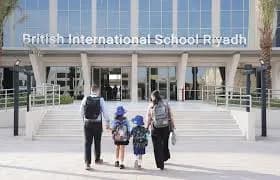
Riyadh has the largest concentration of international schools in the Kingdom. Notable schools include the British International School of Riyadh (BISR), the American International School of Riyadh (AISR), Riyadh Schools (formerly Saudi Aramco schools), and several IB World Schools. Many are located in the Diplomatic Quarter or surrounding compounds.
Jeddah also has a strong selection, including the American International School of Jeddah (AISJ), the British International School of Jeddah (BISJ), and Jeddah Knowledge International School (JKS). Schools in Jeddah tend to have a slightly more relaxed atmosphere compared to Riyadh, reflecting the city's generally more cosmopolitan culture.
The Eastern Province (Dammam, Dhahran, Khobar) benefits from the presence of Saudi Aramco, which operates some of the best schools in the country. The Dhahran schools run by Aramco are highly regarded but typically restricted to Aramco employees and their dependents. Other international schools in the area include ISG Dammam and various British and American curriculum schools.
Smaller cities like Yanbu, Jubail, and Al Khobar have more limited options. If you are relocating to a smaller city, research school availability early. In some cases, families choose to live in a larger city nearby and commute, or they opt for boarding schools or homeschooling.
Most international schools have waiting lists, especially for popular year groups. It is common to apply 6-12 months in advance. Some schools require entrance assessments, interviews, or both. If your employer is sponsoring your move, ask whether they have relationships with specific schools that could help with placement.
The curriculum your child follows has a significant impact on their academic path, especially for secondary school and university admissions. Here is how the main options compare:
| Curriculum | Origin | Key Exams | Best For | Availability |
|---|---|---|---|---|
| British (IGCSE / A-Levels) | United Kingdom | IGCSE (Year 11), A-Levels (Year 13) | UK, Commonwealth, and many global universities | Very common across all major cities |
| American | United States | SAT, AP exams, High School Diploma | US and Canadian universities | Common in Riyadh, Jeddah, Eastern Province |
| International Baccalaureate (IB) | Switzerland | IB Diploma (ages 16-19) | Families who move frequently; globally recognized | Growing but fewer schools than British/American |
| French (AEFE) | France | Baccalaureat | French-speaking families, Francophone universities | Limited - mainly Riyadh and Jeddah |
| Indian (CBSE / ICSE) | India | CBSE Board Exams (Class 10, 12) | Indian families planning to return to India | Very common - many schools across all cities |
| Pakistani | Pakistan | Matric / O-Levels | Pakistani families | Available in major cities |
British curriculum is the most widely available in Saudi Arabia and is a safe choice for most Western expat families. The structured exam system (IGCSE followed by A-Levels) is well understood by universities globally, and it is easy to transfer between British schools in different countries.
American curriculum tends to offer more flexibility and a broader range of subjects, with a credit-based system rather than high-stakes exams at set ages. Advanced Placement (AP) courses allow motivated students to earn college credit. However, the American diploma alone may require additional standardized test scores (SAT/ACT) for university admissions outside the US.
IB (International Baccalaureate) is ideal if you expect to move countries again. The IB Diploma is recognized by virtually every university in the world, and the program emphasizes critical thinking, research skills, and community service. It is academically demanding, which suits strong students but may not be the right fit for everyone.
Indian curriculum (CBSE) schools are among the most affordable international options in Saudi Arabia and are numerous. They are the natural choice for Indian families but may not be ideal for families planning to enter Western university systems, as CBSE qualifications sometimes require additional validation.
Public schools in Saudi Arabia are free for Saudi citizens and open to residents, but they teach entirely in Arabic and follow the Saudi national curriculum. Subjects include Arabic, mathematics, science, Islamic studies, and social studies. For non-Arabic-speaking children, public schools present a steep language barrier. Most expat families do not consider them a viable option, though some Arabic-speaking families (from Egypt, Jordan, Lebanon, etc.) do use them successfully.
Private Saudi schools also follow the Saudi curriculum but often add more English instruction and may have better facilities than public schools. Tuition is significantly lower than international schools, typically ranging from SAR 5,000 to SAR 20,000 per year. These can be a reasonable option for Arab expat families who want their children to learn in Arabic while receiving some English education. Quality varies widely, so visit and evaluate any school before committing.
Both public and private Saudi schools are gender-segregated at all levels and include mandatory Islamic studies. The school week runs Sunday through Thursday, matching Saudi Arabia's standard working week. This applies to international schools as well, which is an important adjustment for families coming from countries with a Monday-to-Friday schedule.
The school day in Saudi Arabia starts early. Most international schools begin between 7:00 and 7:30 AM and finish between 2:00 and 2:30 PM. The early start is deliberate: it allows the bulk of the school day to happen before the worst of the afternoon heat, and it aligns with Saudi working hours. If you are coming from a country where school starts at 8:30 or 9:00, the adjustment can be significant, especially for teenagers.
The school week runs Sunday through Thursday. Friday and Saturday are the weekend. This is one of the biggest adjustments for Western families. Your child will be in school while their friends and relatives back home are off on Sundays, and vice versa on Fridays. It takes a few weeks to get used to, but most families adapt quickly.
School transport is widely used. Most international schools offer bus services that pick children up from home or a nearby collection point. Routes can be long in cities like Riyadh, where distances are large and traffic is heavy. Some children spend 30-45 minutes each way on the bus. If you live close to the school, some families arrange private drivers or carpools. Women can drive in Saudi Arabia, so mothers driving their children to school is increasingly common.
During Ramadan (the Islamic holy month of fasting), school hours are typically shortened. Classes may start later and finish earlier, with a reduced timetable. The exact schedule varies by school and by year, since Ramadan follows the lunar calendar and shifts by about 11 days each year. Some international schools maintain near-normal hours but adjust activities and expectations. Staff and older students who are fasting may have lower energy levels during this period.
Lunch and snacks: Most international schools have a canteen or cafeteria, but many children bring packed lunches. Pork and alcohol are prohibited in all food served at schools (and in the country generally). If your child has dietary requirements, a packed lunch is the safest option. Water bottles are essential given the climate.
After-school activities are common at international schools. Sports (football, swimming, basketball, athletics), arts, music, robotics, and debate clubs are typical offerings. These usually run from 2:30 to 3:30 or 4:00 PM. Some schools also offer after-school care until 5:00 PM for younger children whose parents are still at work. Keep in mind that outdoor sports and PE are often moved indoors or rescheduled during the hottest months (June-September), when temperatures regularly exceed 45°C / 113°F.
Planning flights home, family visits, and holidays requires knowing the school calendar well in advance. Saudi schools follow a three-term (trimester) structure. The exact dates shift slightly each year, partly because some holidays follow the Hijri (Islamic lunar) calendar. Below is a typical calendar for international schools:
| Period | Typical Dates | Duration | Notes |
|---|---|---|---|
| Term 1 starts | Late August / early September | ~13 weeks | New academic year begins |
| Saudi National Day | September 23 | 1 day | Public holiday, schools closed |
| Mid-term break 1 | Late October / November | ~1 week | Some schools skip this break |
| Term 1 ends / Winter break | Mid-December to early January | ~2-3 weeks | Main holiday for flights home |
| Term 2 starts | Early January | ~12 weeks | Resumes after New Year |
| Founding Day | February 22 | 1 day | Public holiday since 2022 |
| Ramadan break | Varies (shifts ~11 days earlier each year) | ~2-4 weeks | Reduced hours or full break; varies by school |
| Eid al-Fitr | End of Ramadan (lunar calendar) | ~1 week | Often combined with Ramadan break |
| Term 3 starts | After Eid al-Fitr | ~10 weeks | Final stretch of the year |
| Eid al-Adha | ~70 days after Eid al-Fitr (lunar calendar) | ~1 week | May fall during term or summer break |
| Summer break | Mid-June to late August | ~10 weeks | Most expat families leave the country |
Important for flight planning: The winter break (December-January) and summer break (June-August) are peak travel periods for expats. Book flights early, as prices to Europe, North America, and South/Southeast Asia spike dramatically during these windows. Some families book return flights 3-6 months in advance.
Ramadan is the wildcard. Because it follows the lunar calendar, Ramadan moves earlier by about 11 days each year. In some years it overlaps with the winter break, creating a long holiday. In other years it falls mid-term, meaning reduced school hours for several weeks. Schools announce their Ramadan schedules well in advance, but the exact start and end dates of Ramadan are confirmed only a day or two beforehand based on moon sighting.
Summer break coincides with the hottest part of the year (June-August, when temperatures in Riyadh regularly hit 48-50°C / 118-122°F). The vast majority of expat families leave Saudi Arabia during this period. Many compounds and residential areas feel deserted. If you stay, summer camps and indoor activities are available in major cities but options are more limited than during the school year.
School fees in Saudi Arabia vary enormously. The table below gives approximate annual tuition ranges for different school types. All figures are in Saudi Riyals (SAR). For reference, 1 USD is approximately 3.75 SAR.
| School Type | Annual Tuition (SAR) | Annual Tuition (USD approx.) | Notes |
|---|---|---|---|
| Public School | Free | Free | Arabic only, Saudi curriculum |
| Private Saudi School | 5,000 - 20,000 | $1,300 - $5,300 | Arabic-medium, some English |
| Indian / Pakistani School | 8,000 - 25,000 | $2,100 - $6,700 | CBSE/ICSE curriculum |
| Mid-Range International | 25,000 - 55,000 | $6,700 - $14,700 | British/American curriculum |
| Premium International | 60,000 - 120,000+ | $16,000 - $32,000+ | Top British, American, IB schools |
Additional costs can add significantly to the bill. Registration fees (often non-refundable) range from SAR 1,000 to SAR 5,000. School buses cost SAR 3,000-8,000 per year. Uniforms run SAR 500-2,000. Lunch programs, after-school activities, field trips, and exam registration fees are usually extra. For premium schools, budget an additional SAR 10,000-15,000 per year on top of tuition.
Many schools require tuition to be paid in full at the start of each term (three payments per year). Some offer monthly payment plans, but this is not universal. Late payment can result in the child being excluded from classes, so plan your cash flow carefully.
Employer education allowances are common in Saudi expat packages, especially for mid-to-senior roles. A typical allowance covers SAR 30,000-80,000 per child per year. Always negotiate this before accepting a job offer, and get the terms in writing. Clarify whether the allowance covers tuition only or includes registration, transport, and other fees.
The enrollment process varies by school, but most international schools in Saudi Arabia follow a similar pattern. Starting early is essential because popular schools fill up quickly and maintaining waiting lists is common.
Step 1: Research and shortlist. Identify 3-5 schools based on curriculum preference, location, and budget. Check each school's website for admissions timelines. Most schools open applications in January-March for the following academic year (starting August-September).
Step 2: Gather documents. You will typically need your child's passport, iqama (residence permit) or a letter from your employer confirming iqama is in process, previous school reports and transcripts (translated into English if not already), vaccination records, passport-size photographs, and the parent's iqama and employment letter. Some schools require documents to be attested or apostilled by your home country.
Step 3: Apply and assess. Submit the application form along with required documents and the registration fee. Many schools will then schedule an entrance assessment and/or interview. For younger children, this may be an informal observation session. For older students, expect written tests in English, mathematics, and sometimes science.
Step 4: Accept the offer. If your child is accepted, you will receive an offer letter. Confirm your place by paying the first term's tuition within the deadline stated. Places are often lost if payment is not received on time.
Step 5: Orientation. Most schools hold orientation days before the start of term. Attend these to meet teachers, understand policies, and help your child feel comfortable before their first day.
Tip: If you are applying from outside Saudi Arabia, many schools accept applications remotely and can conduct assessments online or defer them until arrival. Contact the admissions office directly to discuss your situation. Having your employer write a letter confirming your upcoming relocation and expected iqama issuance can help.
With so many options, choosing a school can feel overwhelming. Here are the most important factors to consider:
Curriculum continuity. If your child has been following a specific curriculum (British, American, IB), switching can be disruptive, especially for older students. Staying with a familiar system reduces stress and ensures their grades and qualifications remain on track.
Location and commute. Traffic in Riyadh and Jeddah is heavy. A school that is 6 miles (10 km) away could mean a 45-minute commute each way during peak hours. Many families choose a school first, then find housing nearby. Alternatively, most schools offer bus services, though these add to the cost and extend the child's day.
Class size and teacher quality. Ask about student-to-teacher ratios. Classes of 20-25 are standard at most international schools. Premium schools often keep classes smaller (15-18). Inquire about teacher turnover, as high turnover can indicate management problems. International schools in Saudi Arabia often recruit teachers from the UK, US, Australia, and South Africa.
Facilities. Visit the campus if possible. Look at classrooms, science labs, libraries, sports facilities, and outdoor spaces. Some newer schools have impressive campuses with swimming pools, performing arts centers, and dedicated STEM labs. Older schools may have more modest facilities but stronger academic reputations.
Community and social life. For expat children, school is the primary social environment. Ask about extracurricular activities, sports teams, clubs, and social events. A school with an active community helps children (and parents) build friendships faster.
Accreditation. Check whether the school holds international accreditation from bodies such as the Council of International Schools (CIS), Middle States Association (MSA), or the British Schools Overseas (BSO) inspection. Accreditation is not legally required but indicates that the school meets recognized quality standards and undergoes regular external review.
One of the most common questions from families moving to Saudi Arabia is: will my child need to learn Arabic? The short answer is that it depends on the school and how long you plan to stay, but some exposure to Arabic is almost unavoidable and can be genuinely beneficial.
Arabic at international schools. Most international schools in Saudi Arabia include Arabic as a subject, typically 2-4 lessons per week. For non-native speakers, this is usually taught as a foreign language (Arabic as an Additional Language, or AAL) starting from basic greetings and the alphabet. Muslim students at international schools are also required to take Islamic studies classes, which may be taught partly in Arabic. The depth and quality of Arabic instruction varies widely between schools.
How much Arabic do children actually learn? At most international schools, children will pick up basic conversational Arabic: greetings (Assalamu Alaikum, Marhaba), common phrases (Shukran for thank you, Yalla for let's go), numbers, and simple sentences. Children who stay for several years and engage with Arabic outside school can develop stronger skills, but few international school students become fluent unless they make a deliberate effort or have Arabic-speaking friends.
Is Arabic useful in daily life? In the expat bubble (international schools, compounds, malls, offices), English is sufficient for almost everything. However, knowing some Arabic makes daily interactions smoother and richer. Reading shop signs, understanding announcements, speaking to taxi drivers, or chatting with Saudi neighbors becomes much easier with even basic Arabic. For children who may stay in the region long-term, stronger Arabic skills open up social and professional opportunities.
Arabic classes for parents. Several language schools and cultural institutes in Riyadh and Jeddah offer Arabic courses for adults. Some compounds and community centers also run informal Arabic classes. Online platforms and private tutors are another option. Learning alongside your child, even at a basic level, can be a bonding experience and helps the whole family feel more at home.
Which Arabic? Be aware that there are significant differences between Modern Standard Arabic (MSA, used in schools and media), Gulf Arabic (the local Saudi dialect), and other dialects like Egyptian or Levantine Arabic. Schools teach MSA, but everyday conversation in Saudi Arabia uses Gulf Arabic. If your goal is practical communication, supplementing school Arabic with some Gulf dialect phrases is helpful.
Moving to Saudi Arabia is a major transition for children, regardless of their age. The culture, climate, and daily routines are different from most Western countries, and it is normal for children to experience a period of adjustment. Understanding what to expect helps parents provide the right support.
The first few weeks. Most international schools are experienced at welcoming new students mid-year or at the start of term. Many assign a buddy or mentor to help newcomers navigate the school. Expect your child to feel overwhelmed initially. The heat, the new environment, the different weekend (Friday-Saturday instead of Saturday-Sunday), and being far from friends back home can all contribute to homesickness. This is normal and usually passes within 4-8 weeks.
Making friends. The good news is that international schools are full of children who have been through the same experience. Many students have moved multiple times and are open to making new friends quickly. Encourage your child to join extracurricular activities, sports teams, or clubs as soon as possible. These are the fastest way to build friendships outside the classroom.
The heat factor. If you arrive between April and October, the heat will be the most immediate challenge. Outdoor play is limited or impossible during the hottest months. Children used to running around outside after school will need to adjust to indoor activities, mall outings, and swimming pools as their primary recreation. Schools with strong indoor facilities (gyms, sports halls, air-conditioned play areas) make a big difference during summer months.
Cultural differences. Saudi Arabia has become significantly more open in recent years, but it remains a conservative society. Prayer times affect shop opening hours and daily routines. Entertainment options, while expanding rapidly (cinemas, theme parks, concerts are all now available), are still different from what children may be used to in Europe or North America. Talk to your child about these differences in an age-appropriate way before you arrive.
Staying connected. Video calls, messaging apps, and online gaming make it easier than ever for children to maintain friendships from their previous country. Encourage this, especially in the early months, but also set boundaries so that it does not prevent them from engaging with their new environment. The goal is a healthy balance between old and new connections.
When to seek help. If your child is still struggling significantly after 2-3 months (refusing to go to school, persistent sadness, withdrawal, or behavioral changes), speak to the school counselor. Most international schools have trained counselors who understand the challenges of expat transitions and can provide support. Do not wait too long to reach out, as early intervention makes a real difference.
Saudi Arabia has invested heavily in higher education over the past two decades. While most expat families send their children abroad for university, there are strong domestic options worth considering, especially in STEM fields and for students who receive scholarships.
King Abdullah University of Science and Technology (KAUST) in Thuwal is a graduate-level research university that consistently ranks among the top institutions in the Middle East. It operates entirely in English, has a diverse international student body, and offers generous scholarships. KAUST's campus is a self-contained community with excellent facilities.
King Fahd University of Petroleum and Minerals (KFUPM) in Dhahran is one of the top engineering and science universities in the Arab world. It teaches in English and has strong links to the petroleum industry. Admission is competitive.
King Saud University (KSU) in Riyadh is the largest and one of the oldest universities in the Kingdom. It offers programs in Arabic and English across a wide range of disciplines. Princess Nourah bint Abdulrahman University, also in Riyadh, is the largest women's university in the world.
Private universities such as Alfaisal University, Prince Sultan University, and Effat University offer English-medium programs with smaller class sizes. Tuition is higher (SAR 40,000-100,000+ per year) but the quality of instruction and facilities can be excellent.
Many expat students in Saudi Arabia complete their secondary education at international schools, then apply to universities in the UK, US, Canada, Australia, or Europe. Schools with British or IB curricula generally prepare students well for international university applications. American curriculum schools offer SAT preparation and college counseling to support US university applications.
For children under school age (typically 3-5 years old), Saudi Arabia has a growing number of nurseries and pre-schools. The quality and approach varies significantly, from simple daycare facilities to structured early-years programs following recognized frameworks like the British Early Years Foundation Stage (EYFS) or Montessori methodology.
Many international schools have attached nursery or pre-school departments (often called Foundation Stage or KG1/KG2). Enrolling in the nursery section of your preferred school can give your child priority admission to the main school, which is a significant advantage at oversubscribed schools.
Costs for nurseries range from SAR 10,000 to SAR 40,000 per year for part-time or full-time programs. Premium nurseries attached to top international schools charge more. Some employer packages include a childcare or education allowance that can be used for nursery fees.
When evaluating nurseries, pay attention to the staff-to-child ratio (look for no more than 1:8 for toddlers and 1:10 for pre-school age), the qualifications of the staff, hygiene standards, outdoor play areas, and the structure of the daily program. Licensed nurseries are inspected by the Ministry of Education, but enforcement varies, so personal visits are essential.
In Riyadh and Jeddah, compound communities often have nurseries within the compound. These can be convenient and provide a familiar, safe environment for young children, though they may be smaller and less structured than standalone nurseries.
Education is just one piece of the puzzle. Explore our guides on visas, housing, healthcare, and daily life to prepare your family for a smooth transition.