
Loading...
Join our Facebook Group: Join: Expats in Saudi Arabia
Loading...
Saudi Arabia is one of the world's most active markets for expatriate professionals, offering tax-free salaries and a hiring boom driven by Vision 2030. From Aramco and the energy sector to the giant NEOM, Qiddiya and Red Sea megaprojects, healthcare, IT, finance, education and hospitality, this guide covers where the jobs are, what they pay in SAR, and exactly how the work-visa and Iqama process works.
Saudi Arabia has long relied on international talent, and expatriates make up a large share of its private-sector workforce. This guide covers everything a foreign professional needs to know about finding work in the Kingdom, from the sectors that are hiring and what they pay in tax-free Saudi riyals (SAR) to the employer-sponsored visa process and the Saudization rules that shape who gets hired.
The defining force in the current market is Vision 2030, the national plan to diversify the economy away from oil. It has launched a wave of "giga-projects" and a broad push into tourism, entertainment, technology, and finance, all of which have increased demand for skilled foreign workers.
Alongside the traditional backbone of oil and gas, led by Saudi Aramco, employers are hiring across construction and engineering, healthcare, information technology, banking and finance, education, and hospitality. English is the working language of most international companies and giga-projects, though Arabic is an asset for local and government-facing roles.
The main employment hubs are Riyadh, the capital and corporate center; Jeddah, the commercial gateway on the Red Sea; and the Eastern Province cities of Dammam, Dhahran and Khobar, which anchor the energy industry. New destinations such as NEOM in the northwest are also drawing talent from around the world.
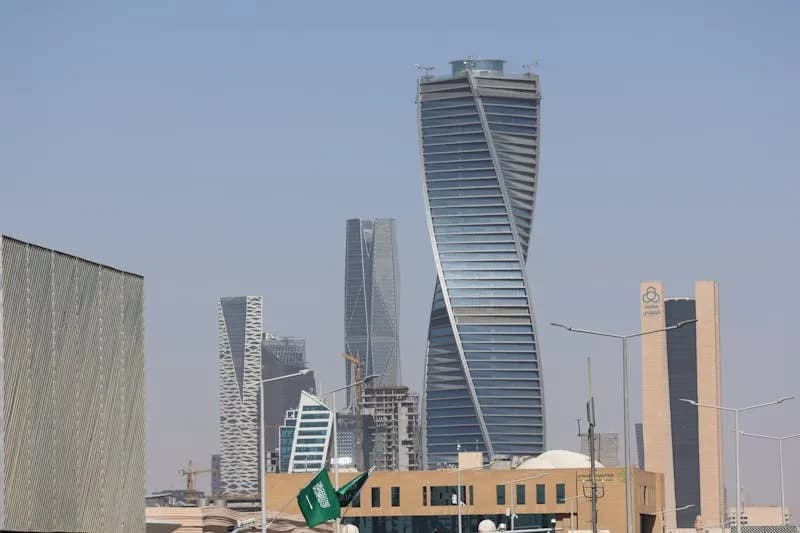
The single biggest draw is pay: Saudi Arabia charges no personal income tax, so your gross salary is effectively your take-home pay. Combined with employer benefits, this lets many expats save a substantial portion of their earnings. See our tax-free guide for the full picture on what is and isn't taxed.
Compensation is often quoted as a package rather than a single number. Beyond base salary, professional roles frequently include a housing allowance, transport allowance, annual return flights to your home country, and private medical insurance. Always compare the total value of the package, not just the headline figure. Our expat salary guide breaks down how these allowances typically work.
Vision 2030 megaprojects are the clearest signal of where hiring is heading. NEOM (a futuristic region and the linear city "The Line"), Qiddiya (entertainment and sports), and the Red Sea Project (luxury tourism) all require engineers, project managers, technology specialists, and hospitality professionals, sustaining strong demand across the private sector.
Major employers range from Saudi Aramco and SABIC in energy and petrochemicals to global consultancies, contractors, hospital groups, banks, and international schools. These organizations are experienced with hiring and sponsoring foreign staff, which usually makes the visa process smoother.
Get connected with recruitment agencies that specialize in placing foreign professionals in Saudi Arabia. Tell us about your experience and we'll match you with the right recruiters.
Expat-friendly employers
Our partners work with companies that actively hire international talent and handle visa sponsorship
English-speaking workplaces
Positions where English is the primary working language - no Arabic required for many roles
Free for job seekers
You never pay for recruitment services - the hiring company covers all fees
Visa & Iqama support
Matched employers handle the work visa and Iqama process so you can focus on your career
Salaries in Saudi Arabia vary widely by sector, seniority, employer, and your market rate, but they share one big advantage: they are tax-free. The figures below are broad, approximate monthly ranges in Saudi riyals (SAR) for foreign professionals, meant as a rough orientation rather than precise averages. SAR is pegged to the US dollar at roughly 3.75 SAR to 1 USD, so you can divide the SAR figure by about 3.75 for an approximate dollar equivalent. Always weigh the full package (housing, flights, insurance) alongside base pay.
| Sector & Typical Roles | Entry / Junior | Mid-Level | Senior / Specialist |
|---|---|---|---|
| Oil & Gas / Energy engineers, technicians (Aramco, SABIC) | 10,000-18,000 | 18,000-40,000 | 40,000-80,000+ |
| Construction & Engineering NEOM, Qiddiya, Red Sea megaprojects | 8,000-15,000 | 15,000-30,000 | 30,000-60,000+ |
| Healthcare nurses, doctors, specialists | 6,000-12,000 | 12,000-25,000 | 25,000-60,000+ |
| IT & Technology developers, cybersecurity, data, cloud | 8,000-14,000 | 14,000-28,000 | 28,000-50,000+ |
| Finance & Banking analysts, accountants, fintech | 8,000-15,000 | 15,000-30,000 | 30,000-60,000+ |
| Education school teachers, university faculty | 7,000-12,000 | 12,000-20,000 | 20,000-40,000+ |
| Hospitality & Tourism hotel staff, F&B, management | 2,500-6,000 | 6,000-14,000 | 14,000-30,000+ |
Note: These ranges are approximate and intended only as a rough guide. Actual offers depend on the employer, your qualifications, and negotiation, and pay for the same role can differ by market and nationality. Package extras such as housing and flights can add significant value on top of base pay.
Oil & gas and energy.Saudi Aramco is the Kingdom's flagship employer, and petrochemical producers such as SABIC add further demand. These roles pay among the highest salaries and often come with premium benefits, but they are also the most competitive. Apply directly through the Aramco careers portal for the best route in.
Construction & engineering. The Vision 2030 giga-projects, NEOM, Qiddiya, the Red Sea Project and others, have created sustained demand for civil, mechanical and electrical engineers, project managers, quantity surveyors, and skilled trades. This is currently one of the largest sources of expat hiring.
Healthcare. Hospitals and clinics rely heavily on foreign doctors, nurses, and allied health professionals. Recognized qualifications and registration with the Saudi Commission for Health Specialties (SCFHS) are typically required. Demand is steady across both public and private facilities.
IT, finance, education and hospitality. Digital transformation is fueling demand for software engineers, cybersecurity and cloud specialists, and data professionals. Banking and fintech are expanding in Riyadh. International schools continuously recruit qualified teachers, and the fast-growing tourism sector needs hospitality talent at every level.
Here is the good news that surprises many newcomers: because there is no personal income tax, the salary you are offered is essentially what lands in your bank account. A 20,000 SAR monthly salary is close to 20,000 SAR of take-home pay. This is very different from most home countries where a large slice disappears to income tax.
A few caveats: expatriates are generally not enrolled in the Saudi pension scheme, though employers pay a small occupational-hazard contribution to GOSI on their behalf, and a modest deduction may apply to certain categories. There is also a 15% VAT on most purchases. But wages themselves are untaxed. You can sanity-check figures with our salary calculator.
One thing to remember: end-of-service benefits (a lump sum paid when your contract ends) are a legal entitlement under Saudi labor law and effectively form part of your total compensation. Factor them in when comparing offers.
Understanding Saudization is essential for any foreigner job-hunting in the Kingdom, because it determines which roles are open to you in the first place.
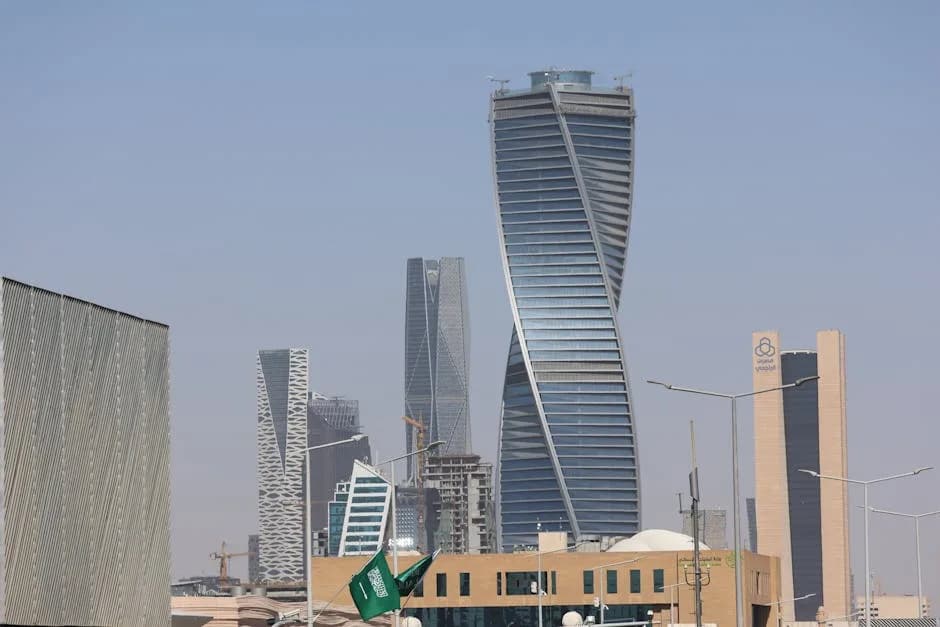
Vision 2030 is reshaping the Saudi labor market
Saudization is the national policy of increasing the number of Saudi nationals in the workforce. It is enforced through a program called Nitaqat, which reserves a quota of jobs for Saudi citizens. Every private company must maintain a minimum percentage of Saudi employees, with the required ratio varying by industry and company size.
Some job categories are restricted to Saudi nationals entirely, for example certain HR, reception, and retail roles, so those positions will not be open to expats. Beyond those restricted roles, the demand for foreign talent remains strong in specialized and technical fields where local supply is limited.
Nitaqat rates companies by how well they meet their Saudization targets. Companies in higher bands enjoy easier access to government services, including the ability to obtain and renew work visas for foreign employees. Companies that fall behind face restrictions on hiring expats. In practice, this means well-established employers with strong Saudization compliance can sponsor you more easily.
For you, the practical takeaway is to target roles that are genuinely specialized, senior, or in short supply locally, and to focus on larger, compliant employers who have the visa capacity to hire foreigners. Our detailed Saudization guide explains the Nitaqat bands and quotas in depth.
Most expat hiring in Saudi Arabia happens online and through recruitment agencies. Knowing which platforms carry the strongest Saudi listings, and applying strategically, makes a real difference.
Use two or three complementary boards at once, keep a strong LinkedIn profile, and apply directly on company career pages for the roles you want most. A tailored CV and a short cover note that references the specific company will help you stand out.
Because visas are employer-sponsored, aim for companies that explicitly hire foreign staff. Job posts that mention "transferable Iqama" or "will sponsor" are strong signals.

Bayt - one of the largest job sites in the Middle East, with extensive Saudi listings across every industry and experience level. A must-have for any job search in the region.
GulfTalent - a Gulf-focused platform popular for professional and management roles, widely used by recruiters hiring for Saudi Arabia and the wider GCC.
Naukrigulf - strong coverage of Gulf jobs, especially popular with candidates from South Asia and for engineering, IT, and healthcare roles.
LinkedIn - essential for professional and management positions, direct recruiter contact, and networking with employers and agencies active in Saudi Arabia.
Indeed - a large global aggregator with a dedicated Saudi Arabia site that pulls listings from many sources across the Kingdom.
Aramco Careers- for oil and gas, apply directly through Saudi Aramco's official careers portal rather than relying on third-party boards. Many other giga-project employers, hospital groups, and international schools also post exclusively on their own career pages.
Set up email alerts on Bayt and GulfTalent for broad coverage, monitor LinkedIn for professional roles, and check the Aramco portal and other company sites directly for your target employers. Applying to a mix of boards and direct listings gives you the widest reach.
Once you have an offer, understand your rights under Saudi labor law before signing, and review a full expat package breakdown so you can negotiate housing, flights, and end-of-service benefits.
Some of the most common job searches focus on specific nationalities, employers, and cities. Here are short, practical answers to the ones we get asked about most.
US citizens can work in Saudi Arabia on an employer-sponsored work visa, exactly like other expatriates. There is steady demand for American professionals in oil and gas, engineering, healthcare, IT, finance, and education, and many packages offer tax-free SAR salaries plus housing, annual flights, and medical insurance. Start on LinkedIn and the Aramco careers portal, and target large employers used to sponsoring foreign staff.
One thing to plan for: unlike most countries, the United States taxes citizens on worldwide income, so you still file a US return. The Foreign Earned Income Exclusion can shield a large portion of your Saudi earnings, but confirm your situation with a US tax adviser before you sign.
Saudi Aramco is the Kingdom's flagship employer and one of the most sought-after names for expats, hiring petroleum, chemical, mechanical, electrical, and civil engineers as well as IT, finance, and skilled technical staff. Aramco roles pay among the highest salaries in the country and typically include premium benefits such as housing in company compounds, schooling support, and generous leave, which also makes them highly competitive.
Apply directly through the official Aramco careers portal rather than third-party boards, and keep your CV tailored to the specific role. Petrochemical producer SABIC and other energy employers offer similar high-paying opportunities in the Eastern Province around Dhahran, Dammam, and Khobar.
Jobs in Riyadh. The capital is the corporate and government hub, with the deepest market for finance, banking, fintech, technology, consulting, and headquarters roles. Most multinationals and giga-project head offices are based here, so Riyadh usually has the widest range of professional openings.
Jobs in Jeddah. The Red Sea commercial gateway is strong in trade, logistics, retail, hospitality, and healthcare, and it serves as a base for Red Sea tourism projects. It has a more relaxed, cosmopolitan feel than Riyadh.
Jobs in Medina. Roles in Medina cluster around healthcare, education, hospitality, and services tied to religious tourism and the millions of annual pilgrims. Note that non-Muslims cannot enter the central holy area, which affects some location-specific postings. Across all three cities, filter Bayt, GulfTalent, LinkedIn, and Indeed by location to find city-specific listings.
Working in Saudi Arabia legally requires an employer-sponsored work visa. Unlike many countries, you cannot simply arrive and job-hunt on the ground: a Saudi company must sponsor you, and your legal residency is tied to that sponsor. Understanding the sequence early saves weeks of delay.
Everything starts with a signed offer from a Saudi employer willing to sponsor you. The employer must have the visa capacity to hire foreigners, which is governed by their Saudization (Nitaqat) status. Larger, compliant companies generally find it easiest to sponsor expats. The employer initiates the process through government platforms such as Qiwa and the Ministry of Human Resources and Social Development.
Before your visa is issued you will typically need your degree certificates and, in some cases, a criminal-record check attested (legalized) in your home country, along with a medical fitness examination. Attestation is the step that most often causes delays, so start it as soon as you accept an offer. Our document attestation guide walks through the process.
Once the paperwork is approved, the employer obtains a work visa authorization, and you collect the entry visa from a Saudi embassy or consulate (or via the appropriate e-service). You then travel to the Kingdom to begin employment. Full details on the visa category are in our work visa guide.
After you arrive, your employer must convert your entry visa into an Iqama, the residence permit that makes you a legal resident. It is normally issued within about 90 days of arrival and must be renewed (usually annually). Your Iqama is your key identity document in the Kingdom: you need it to open a bank account, sign a lease, get a phone line, and sponsor family members. Learn what the Iqama number is and how to use it.
Once you hold an Iqama and meet the salary and job-category requirements, you can sponsor dependents through a family visa. Job mobility has also improved: labor reforms have made it easier for many workers to transfer between employers under defined conditions, reducing the old dependence on a single sponsor. Always confirm the current transfer rules for your contract type before making a move.
The smoothest path is an employer experienced with foreign hires. Established international companies, giga-project contractors, major hospital groups, and international schools have HR teams that handle sponsorship routinely and often cover attestation and relocation costs. Smaller local firms may be less familiar with the paperwork, so clarify who pays for what, and confirm the company's ability to sponsor, before you sign.
Search employer-sponsored roles on Gulf job boards such as Bayt, GulfTalent and Naukrigulf, use LinkedIn and Indeed for professional positions, and apply directly on company career pages like the Aramco careers portal. Target specialized or senior roles where local supply is limited, and favor larger, Saudization-compliant employers that can sponsor your work visa. Once you accept an offer, the employer arranges the work visa and, after arrival, your Iqama (residence permit).
Yes. US citizens can work in Saudi Arabia on an employer-sponsored work visa, the same route used by other expatriates. There is strong demand for American professionals in oil and gas, engineering, healthcare, IT, finance and education, and many roles offer tax-free salaries plus benefits such as housing, flights and medical insurance. You still owe US federal taxes on worldwide income, but the Foreign Earned Income Exclusion can offset much of it, so confirm your position with a US tax adviser.
Yes. Saudi Arabia charges no personal income tax on salaries for either Saudis or expatriates, so your gross monthly pay is essentially your take-home pay. There is a 15% VAT on most goods and services, but wages themselves are not taxed. This is one of the main reasons expats can save a large share of their earnings.
Yes. Non-Saudis must have an employer-sponsored work visa. A Saudi company sponsors your entry, and after you arrive you receive an Iqama (residence permit) that ties your legal status to that employer. You cannot legally work on a visit or tourist visa. The employer handles most of the paperwork through the Ministry of Human Resources and the Qiwa and Absher platforms.
Saudization, administered through the Nitaqat program, reserves a quota of jobs for Saudi nationals. Each sector and company size has a minimum percentage of Saudi employees it must maintain, and some roles are restricted to Saudis entirely. Companies with strong Saudization ratings find it easier to obtain and renew work visas for foreign staff, so it directly influences which expat roles are available.
Oil and gas (led by Saudi Aramco), construction and engineering tied to Vision 2030 megaprojects such as NEOM, Qiddiya and the Red Sea Project, healthcare, IT, finance, education, and hospitality are the biggest employers of foreign talent. Vision 2030 has significantly increased demand for skilled professionals across most of these fields.
Bayt and GulfTalent are the leading Gulf-focused boards, and LinkedIn is widely used for professional and management roles. Indeed and Naukrigulf also carry large numbers of Saudi listings. For oil and gas, apply directly through the Aramco careers portal. Setting up alerts on two or three of these gives the best coverage.
It depends heavily on sector, seniority, and your nationality-linked market rate. As broad, approximate monthly guides in tax-free SAR: healthcare nurses often earn 6,000-12,000, engineers and IT professionals 10,000-30,000, doctors and specialists 20,000-60,000+, and senior oil and gas or finance roles can exceed 40,000. Many packages also include housing, transport, annual flights, and medical insurance, so compare the total package, not just base pay.
Usually yes, if you meet the salary threshold and your job category qualifies. Once you hold an Iqama, you can sponsor dependents through a family visa. Many expat packages for professional roles include family accommodation and schooling allowances, but lower-paid categories may not qualify to sponsor dependents.
From a signed offer to arrival typically takes several weeks to a couple of months, depending on document attestation and medical checks. After you arrive, the employer must issue your Iqama, usually within about 90 days. Delays most often come from attesting your degree and criminal-record documents in your home country, so start those early.
With the right preparation and a sponsor who knows the system, landing a well-paid, tax-free job in the Kingdom is well within reach. Explore the sectors that are hiring and take the next step today.