Loading...
Join our Facebook Group: Join: Expats in Saudi Arabia
Loading...
Around 13 million foreigners live and work in Saudi Arabia, making up roughly a third of the country's population. This guide covers what life is actually like for them: legal status, work, money, daily life, and what nobody tells you before you arrive.
By How to Saudi Arabia Editorial Team · Last updated:
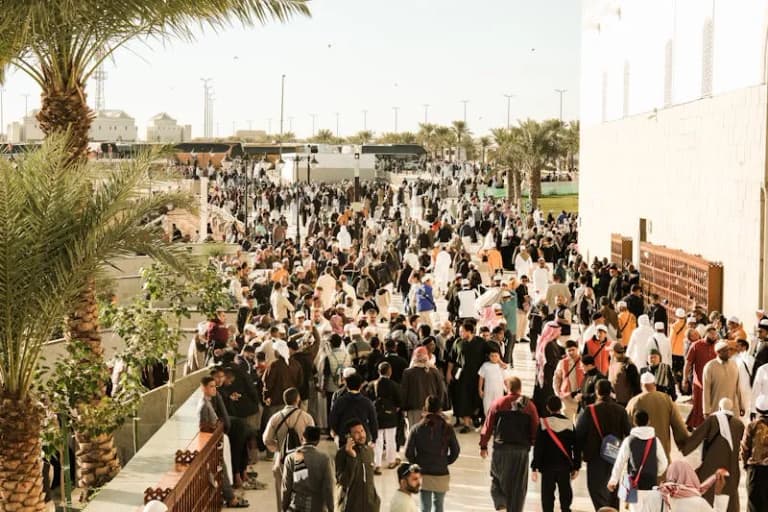
Saudi Arabia is home to one of the largest foreign populations in the world. Around 13 million foreigners live in the country, making up roughly a third of the total population of about 36 million. In cities like Riyadh, Jeddah, and Dammam, foreigners often make up more than half of the residents.
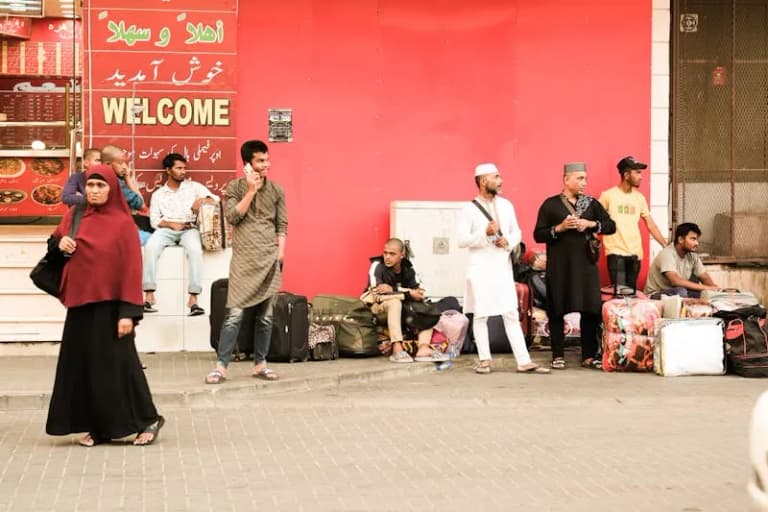
The largest nationality groups are Indian (over 2.5 million), Pakistani, Bangladeshi, Egyptian, Filipino, Indonesian, Yemeni, and Sri Lankan. There are also sizable communities from other Arab countries, Western expats (particularly Americans, British, and Europeans working in oil, defense, and consulting), and growing numbers of professionals from Africa and Central Asia. This diversity means that the "foreigner experience" in Saudi Arabia varies enormously depending on your nationality, profession, and income level.
A construction worker from Bangladesh and a finance director from the UK live in the same country but inhabit very different versions of it. The guide pages on this site, including the cost of living and expat salary guides, reflect this range. This page covers the common threads that apply to all foreigners, regardless of where they come from.
Saudi Arabia's relationship with its foreign population is changing rapidly under Vision 2030. The country is actively trying to attract and retain skilled foreign workers, has introduced Premium Residency (similar to a green card), relaxed rules on property ownership for foreigners, and opened up sectors like tourism and entertainment that were previously restricted. At the same time, Saudization policies continue to push companies to hire more Saudi nationals, which directly affects foreign workers in certain industries.
Every foreigner living in Saudi Arabia needs an Iqama (residence permit), which is essentially your identity card, work authorization, and legal status rolled into one document. The Iqama is tied to a sponsor, usually your employer, who is legally responsible for you under what remains of the kafala (sponsorship) system.
Recent reforms have loosened the kafala system significantly. Foreign workers can now change jobs without their employer's consent in many cases, and can apply for exit and re-entry visas more easily. But the sponsor relationship still matters. Your employer handles your Iqama issuance and renewal, and in practice your ability to stay in the country depends on having a valid Iqama attached to a valid sponsor.
Your Iqama number is used for nearly everything: opening a bank account, signing a rental contract, getting a phone number, accessing government services through Absher, and even buying certain goods. Losing it, letting it expire, or having it canceled by your employer creates immediate and serious problems. It is the single most important document you have as a foreigner in Saudi Arabia.
The main visa categories for foreigners are the work visa (the most common route), the family/dependent visa for spouses and children of workers, the freelance visa introduced in recent years for independent workers, and the Premium Residency for high-net-worth individuals who want to live independently without a Saudi employer sponsor. Each category comes with different rights and restrictions around employment, family sponsorship, and mobility.
Work is the reason most foreigners are in Saudi Arabia. The economy relies heavily on foreign labor across all sectors, from construction and domestic services to engineering, healthcare, finance, and technology. Saudi Arabia does not have a minimum wage for foreign workers (only for Saudis), so salaries range enormously depending on your profession, nationality, and the company you work for.
The typical expat package for professional roles includes a base salary, housing allowance (or company-provided housing), annual return flights to your home country, health insurance, and sometimes a transportation allowance and schooling support for children. For senior positions, these packages can be very competitive and are one of the main reasons skilled professionals choose Saudi Arabia over other destinations. You can use our salary calculator to see what a Saudi salary looks like with no income tax.
The biggest factor affecting foreign workers is Saudization (Nitaqat), the government's policy of replacing foreign workers with Saudi nationals in certain roles and industries. Companies are assigned color-coded categories (green, yellow, red) based on their ratio of Saudi to foreign employees. If a company falls into a low category, it faces restrictions on hiring new foreigners and renewing existing work visas. This means that your job security as a foreigner is partly dependent on your company's Saudization compliance, not just your individual performance.
Saudi labor law applies to all workers, including foreigners. You are entitled to paid annual leave (21 days, increasing to 30 after five years), sick leave, overtime pay, and end-of-service benefits (EOSB) when your employment ends. The working culture varies significantly between Saudi companies and multinational firms, but the standard work week is Sunday to Thursday, and working hours are officially reduced during Ramadan.
The biggest financial attraction of Saudi Arabia is the absence of personal income tax. Your salary is your salary. There is no income tax, no capital gains tax on personal investments, and no inheritance tax. This is true for both Saudis and foreigners. The savings compared to working in a country with 30-40% tax rates are substantial, and it is the primary reason many professionals choose Saudi Arabia.
That said, foreigners do face costs that Saudis do not. GOSI (social insurance) contributions are 2% of salary for non-Saudi employees (compared to 9.75% for Saudis), deducted automatically. There is a dependent levy for family members on your visa, Iqama renewal fees, and VAT at 15% on most goods and services. Use our GOSI calculator and VAT calculator to see how these affect your take-home pay.
Opening a bank account requires an Iqama and a salary certificate from your employer. The major banks (Al Rajhi, SNB, Riyad Bank, SABB) all serve foreign customers, though some are more expat-friendly than others. Our best banks for expats guide covers the differences. Most everyday payments use the mada debit card system, and credit cards are widely available. Sending money home is easy and affordable through bank transfers and licensed exchange houses, though transfer limits and fees vary.
Daily life in Saudi Arabia has changed dramatically in recent years. Entertainment options that did not exist before 2018 are now everywhere: cinemas, concerts, sporting events, restaurants, and cafes have opened across the country. Things to do in major cities now rival most capitals in the region. Women can drive, gender-segregated sections in restaurants are largely gone, and the atmosphere is noticeably more relaxed than it was even five years ago.
Getting around depends on where you live. Riyadh has a new metro system and bus network, but for most residents, having a car is still essential. Getting a driving license is straightforward if you are from an approved country (you can convert your existing license), and slightly more involved if you need to take a test. Ride-hailing apps like Uber and Careem work well in all major cities. Public transport is expanding but still limited compared to European or East Asian cities.
Shopping is easy. Major international brands are present in large malls, and online shopping through platforms like Noon, Amazon.sa, and others delivers quickly. Groceries are affordable, with a mix of hypermarkets (Carrefour, Danube, Tamimi) and smaller local shops. During Ramadan, daily life shifts significantly: restaurants close during daylight hours, working hours are reduced, and the pace of life slows during the day before becoming lively after sunset.
Healthcare is covered by mandatory health insurance that your employer must provide. The quality of private healthcare in Saudi Arabia is generally very good, with modern hospitals and well-trained doctors. Many expats use private hospitals like Mouwasat, Sulaiman Al Habib, and Dr. Soliman Fakeeh. For more details, see our full healthcare guide.
Internet is fast and widely available. Mobile data plans from STC, Mobily, and Zain are affordable, and 5G coverage in major cities is among the best in the world. VoIP services like WhatsApp calling and FaceTime work without restrictions. An eSIM is also an option if your phone supports it.
Where you live as a foreigner in Saudi Arabia depends on your budget, your family situation, and your employer. The three main options are: renting an apartment or villa independently, living in a compound (gated community designed for expats), or accepting company-provided housing.
Compounds are popular with Western expats and families because they offer a familiar lifestyle: swimming pools, gyms, social clubs, and a more relaxed atmosphere inside the walls. They also tend to be expensive. A compound villa in Riyadh can cost 80,000 to 200,000+ SAR per year, though many employers cover this as part of the expat package. Outside compounds, renting an apartment or villa is significantly cheaper, and many areas of Riyadh, Jeddah, and the Eastern Province are comfortable and safe for foreign families.
For Riyadh specifically, our best neighborhoods in Riyadh guide covers the most popular districts for expats, including Al Olaya, Al Malqa, and Diplomatic Quarter. Jeddah offers a different vibe, with its Red Sea coastline and more cosmopolitan, relaxed culture. Al Khobar and Dammam in the Eastern Province are popular with oil industry workers and their families.
Since 2021, foreigners with an Iqama can buy property in Saudi Arabia for personal use in designated areas. This was a significant change, though most expats still rent due to the temporary nature of their stay. If you are considering buying, a mortgage calculator can help estimate the costs.
Many foreigners in Saudi Arabia bring their families. Sponsoring a spouse and children requires a family visa, which in turn requires meeting a minimum salary threshold (currently around 3,000-5,000 SAR per month depending on nationality and profession) and providing adequate housing. There are annual dependent levy fees for each family member on your visa.
Education for expat children typically means international schools, which follow curricula from their home countries (British, American, Indian, Pakistani, French, and others). The quality of international schools varies widely, and fees range from 15,000 SAR to over 100,000 SAR per year depending on the school. The best schools have waiting lists, so applying early is important. Some employers include school fee support in the expat package, which is a significant benefit to negotiate for.
If you are considering marrying a Saudi citizen, the rules are different and significantly more complex. Government permission is required, and the process can take years. Children of a Saudi father and foreign mother are Saudi citizens, while children of a Saudi mother and foreign father are not automatically citizens. Our dedicated marriage guide covers the full process.
Saudi Arabia is generally a good place to raise a family. It is safe, there are plenty of parks, malls, and family-friendly activities, and the sense of community within expat circles is strong. The downsides are the heat (outdoor activities are limited for several months of the year), and the fact that your children may need to leave the country when they finish school if they do not have their own work visa or residence.
Foreigners in Saudi Arabia have significant economic opportunities but limited civic and political rights. Understanding the boundary is important for setting realistic expectations.
What you can do: work (with a valid work visa or permit), rent or buy property, own a car, open bank accounts, start a business (with appropriate licenses), access healthcare and education, travel freely within the country, and practice your religion privately. Recent reforms have also allowed foreigners to attend entertainment events, visit tourist sites, and participate in the growing social scene without the restrictions that existed before 2018.
What you cannot do: vote, run for public office, access public sector jobs reserved for Saudis, stay in the country without a valid Iqama or visa, bring family members without meeting salary and housing thresholds, or easily obtain citizenship (it is technically possible but extremely rare). You also cannot work for an employer other than your sponsor without a transfer or freelance permit, though this restriction has been significantly loosened.
The law applies to everyone equally in theory, but in practice, the consequences of legal trouble are more severe for foreigners. A Saudi citizen who commits a minor offense might receive a fine; a foreigner committing the same offense could face deportation on top of the fine. The labor law protects foreign workers, but enforcement can be uneven, particularly for low-wage workers. If you face a labor dispute, the Ministry of Human Resources and Social Development handles complaints, and there is a growing ecosystem of lawyers who specialize in foreign worker cases.
Saudi Arabia is a conservative Muslim country, and that shapes daily life in visible ways. The call to prayer sounds five times a day, most restaurants serve halal food only, alcohol is completely prohibited, and public behavior is expected to be modest. But within that framework, Saudi society is far more diverse, friendly, and hospitable than most outsiders expect. The stereotype of an ultra-restrictive country does not match the reality that most expats experience in 2026.
Social life for foreigners often revolves around work colleagues, nationality-based communities, compound activities, and the growing number of cafes, restaurants, and entertainment venues. Online communities are also valuable for connecting with other expats, asking questions, and getting practical advice. Our Saudi Arabia Guide Facebook group is a good place to start. Food culture is rich and diverse, influenced by the many nationalities living in the country. You can find Indian, Filipino, Egyptian, Yemeni, Turkish, and international cuisine everywhere, and Saudi dishes like kabsa and mandi are worth trying.
Learning some Arabic is helpful but not strictly necessary. English is widely spoken in business environments and cities. Arabic will help you navigate government services, connect with Saudi colleagues on a deeper level, and feel more at home. Even basic greetings and pleasantries in Arabic go a long way socially.
Dress code norms have relaxed considerably. Foreign women are no longer required to wear an abaya in public, though modest clothing is still expected. Men typically wear Western clothing or their own national dress. For women specifically, our Guide for Women in Saudi Arabia covers current expectations in detail.
During Ramadan, non-Muslims are expected to refrain from eating, drinking, and smoking in public during daylight hours, though this rule is less strictly enforced than it used to be. Many expats find Ramadan to be a positive experience, with iftars (evening meals) becoming social events and the general atmosphere being festive after sunset.
For sightseeing and travel within the country, Saudi Arabia has opened up enormously. Tourist destinations like AlUla, the Red Sea coast, desert camping, and historical sites are now accessible and actively promoted. Weekend day trips are a popular way for expats to explore the country beyond their home city.
When your time in Saudi Arabia ends, whether by choice or because your contract is not renewed, there are several financial and administrative steps to handle. The most important is your End of Service Benefits (EOSB), which is a lump-sum payment based on your salary and years of service. All foreign workers are entitled to this under Saudi labor law, regardless of nationality or job level.
You will need to settle any outstanding loans or financial obligations, close or transfer your bank accounts, and handle any final money transfers. Your employer is responsible for booking your final exit visa and, in most cases, your return flight home. Make sure to collect all official documents from your employer, including your experience certificate and final salary statement.
If you have been living in Saudi Arabia for a long time and want to explore options for staying, Premium Residency allows you to remain without an employer sponsor. For those who qualify, this is a genuine alternative to the traditional work-visa-or-leave model. Our moving to Saudi Arabia guide is also useful if you are considering returning in the future on different terms.
Around 13 million foreign nationals live in Saudi Arabia, making up roughly a third of the total population. The largest communities include Indian, Pakistani, Bangladeshi, Egyptian, Filipino, Indonesian, and Yemeni nationals. In major cities like Riyadh, Jeddah, and Dammam, foreigners make up over half the population.
Yes, but with restrictions. Since 2021, foreign residents can purchase property for personal use in designated areas. Premium Residency holders have broader property rights. Foreigners cannot buy property in Mecca or Medina. The process requires an Iqama, proof of income, and a property that meets the Ministry of Housing's criteria.
Saudi Arabia has no personal income tax for anyone, including foreigners. However, foreigners and their employers must pay several fees: GOSI social insurance contributions (2% from the employee for non-Saudis), Iqama renewal fees, dependent levy fees for family members, and VAT at 15% on purchases. Self-employed foreigners and businesses may also owe zakat or corporate income tax.
Yes. Foreigners can fully own a business in most sectors since the relaxation of foreign ownership laws. You need a MISA license (Ministry of Investment), a commercial registration (CR number), and a minimum capital investment that varies by business type. Some sectors like real estate brokerage, oil exploration, and military equipment are restricted to Saudis.
Saudi Arabia has one of the lowest crime rates in the world. Violent crime against foreigners is extremely rare. The main safety concerns for expats are road safety (traffic accidents are a leading cause of injury), extreme heat during summer months, and occasional sandstorms. The country has strict laws that are consistently enforced, which contributes to the overall sense of safety.
Yes. Foreigners with a valid Iqama can obtain a Saudi driving license by converting their home country license (if from an approved country) or by taking a driving test. An international driving permit alone is not enough for long-term residents. Tourists can use an international driving permit or their home license for short stays.
The Iqama is a residence permit, essentially your ID card as a foreigner living in Saudi Arabia. You need it for almost everything: opening a bank account, renting a home, signing a phone contract, accessing government services, and traveling within the country. Losing or failing to renew your Iqama can result in fines, detention, or deportation. It is tied to your employer or sponsor.
Since 2019, Saudi Arabia offers Premium Residency (similar to a green card) to qualified foreigners. It costs 800,000 SAR for permanent residency or 100,000 SAR per year for renewable residency. Premium Residency holders can own property, run businesses, and sponsor family without a Saudi employer. Regular permanent residency or citizenship for foreigners is still very rare.
Complete relocation guide for expats
Rent, food, transport, and monthly budget
What to negotiate in your contract
Employee rights, leave, and termination
How hiring quotas affect foreign workers
Safety, dress code, and daily life