Loading...
Join our Facebook Group: Join: Expats in Saudi Arabia
Loading...
Saudi Arabia owns the longest stretch of Red Sea coastline and until recently almost nobody dived it. This guide covers the main dive areas from Jeddah and Yanbu to Al Lith, Umluj and the Farasan Islands, with the season, water temperatures, realistic costs, how to get certified and what the rules are. It also covers snorkelling for anyone travelling with non-divers.
By How to Saudi Arabia Editorial Team · Last updated:
Saudi Arabia has around 1,100 miles (1,800 km) of Red Sea coast, more than Egypt, and for decades almost all of it was off limits to foreign visitors. The country only opened tourist visas in 2019, so the reefs have had none of the pressure that Sharm El Sheikh or Hurghada have absorbed. On a typical Jeddah dive day you share the site with your own boat and perhaps one other.
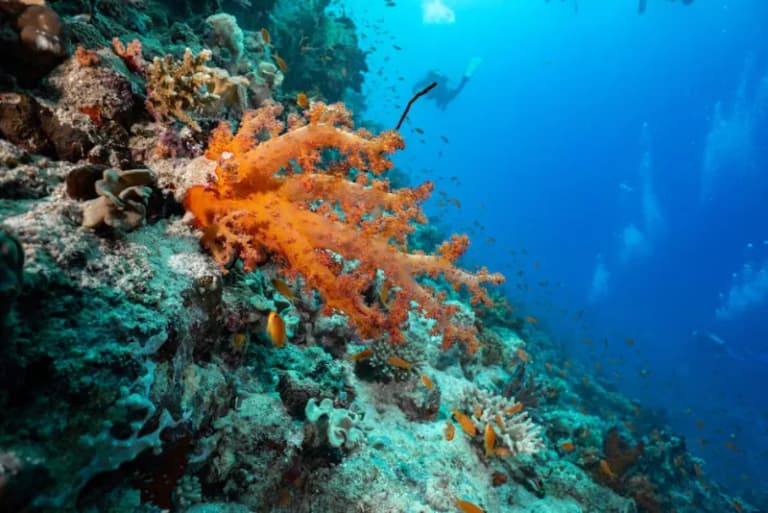
The reefs themselves are in good shape: hard coral cover is high on the offshore reefs, soft corals and gorgonians crowd the walls, and the fringing reef runs so close to the shore that some sites are a few minutes by boat. The Red Sea's unusual salinity and warmth give its corals above-average resilience to heat stress, though bleaching has still been recorded in the hottest years.
Then there are the wrecks. The coast was a shipping lane for centuries and the reefs are unforgiving, so there are dozens of wrecks between Jeddah and Yanbu, several of them in recreational depths and barely dived. Add seasonal hammerheads and whale sharks off Al Lith, dugongs in the Farasan Islands and vast shallow lagoons around Umluj, and you have a destination that feels like the Red Sea did thirty years ago.
The honest caveats: dive infrastructure is thin outside Jeddah, English-language information is patchy, boats can be basic, and logistics take more effort than booking a package to Egypt. This guide is meant to close that gap.
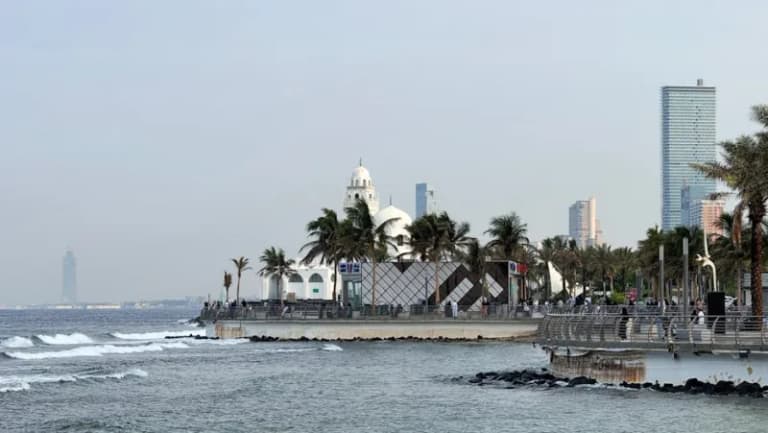
Jeddah is the main base, with most dive centres along Obhur Creek in the north of the city and boats leaving around 7 to 8 am. Within 30 to 90 minutes you reach a wide choice of reefs and wrecks. Abu Tair is a large reef with steep walls, overhangs and the Ann Ann, a cargo ship wreck that slopes from shallow water into the depths and suits advanced divers. The Boiler wreck is the remains of an old steamship on a shallow reef top, named for its intact boiler; it is easy, bright and popular with Open Water divers and photographers. Shiab Al Kabir is a big outer reef complex with drop-offs where you have a fair chance of reef sharks, barracuda and tuna on the seaward side. Closer in, the reefs of Sharm Obhur and sites such as Abu Madafi round out a week of varied diving, and the Cable wreck near Jeddah is a classic shallow wreck dive. See our Jeddah city guide for where to stay.
Yanbu, about 140 miles (230 km) north of Jeddah, has fewer centres but arguably better diving. The Seven Sisters are a line of offshore reefs and pinnacles roughly 1 to 2 hours by boat, with walls that fall away into blue water and, in late winter and spring, schooling hammerheads. The Iona wreck, a British steamship lost in the early twentieth century, sits on a reef with the shallow bow accessible to most divers and the stern in deeper water for advanced certifications. Other regular sites include Abu Galawa and the Marker reefs. Yanbu is a long day trip from Jeddah, so divers normally stay two or three nights in town; hotel standards are solid and prices lower than Jeddah.
Al Lith is a small coastal town about 125 miles (200 km) south of Jeddah and the gateway to the Farasan Banks, a huge offshore system of reefs and shoals that runs south for hundreds of miles. This is liveaboard territory: steep walls, strong fish life, grey reef and silky sharks, and in roughly March to May an aggregation of whale sharks around Shib Habil that has made Al Lith known among researchers. Day boats exist but the best sites are hours offshore, so most divers come on a five to seven night liveaboard from Al Lith or Jeddah. Capacity is small and the good weeks sell out early.
Umluj, around 340 miles (550 km) north of Jeddah, is marketed as the Maldives of Saudi Arabia for good reason: dozens of low sand islands sit in shallow turquoise lagoons with healthy coral gardens. Diving here is shallow and relaxed, better for colour and macro life than big walls, and the snorkelling is as good as anywhere in the country. Just north begins the Red Sea destination developed by Red Sea Global around the Al Wajh lagoon, with luxury resorts, its own airport and strict environmental limits on visitor numbers. Diving there runs through the resorts and is premium-priced; check redseaglobal.com for what is open, since resorts and services were still being added as of November 2026.
In the far south, the Farasan Islands are a protected archipelago reached by a government ferry from Jizan. The marine reserve shelters dugongs, turtles, mantas in season and large seabird colonies, and the islands have Ottoman-era houses and a slow, friendly pace. Diving infrastructure is limited and mostly arranged from Jizan or via small local operators, so this is a destination for adventurous divers who can organise ahead. Book the ferry in advance; it fills on weekends and holidays.
A quick reference. Depths and levels are indicative; your operator will match sites to conditions and to the group's certification.
| Site | Base | Type | Level | Notes |
|---|---|---|---|---|
| Boiler wreck | Jeddah | Shallow wreck on reef | Open Water | Bright, easy, good for photos |
| Abu Tair and Ann Ann wreck | Jeddah | Wall and deep wreck | Advanced | Wreck slopes beyond 100 ft (30 m) |
| Shiab Al Kabir | Jeddah | Outer reef, drop-offs | Open Water to Advanced | Chance of sharks and pelagics |
| Cable wreck | Jeddah | Shallow wreck | Open Water | Close to shore, short boat ride |
| Seven Sisters | Yanbu | Offshore reefs and walls | Advanced | Hammerheads in late winter and spring |
| Iona wreck | Yanbu | Historic steamship | Open Water (bow) to Advanced (stern) | One of the best wrecks in the kingdom |
| Farasan Banks | Al Lith | Liveaboard reefs | Advanced | Whale sharks roughly March to May |
| Umluj islands | Umluj | Shallow coral gardens | All levels and snorkellers | Lagoons and sand islands |
| Farasan Islands reserve | Jizan | Protected archipelago | All levels, limited operators | Dugongs, mantas in season |
You can dive the Saudi Red Sea all year. The question is comfort on the surface and what you want to see.
Visibility is commonly 65 to 100 feet (20 to 30 m) on the offshore reefs and lower close to Jeddah after windy spells. Currents are mild on most sites; the exceptions are the outer walls at Shiab Al Kabir, the Seven Sisters and the Farasan Banks. Treat these ranges as typical, not guaranteed; dive centres post current conditions and will tell you if a site is blown out.
Avoid planning dive days around the Eid holidays and Riyadh school breaks if you want quiet boats, and remember that during Ramadan many centres shorten hours. For the broader picture see our guide to the best time to visit Saudi Arabia.
Diving here costs a little more than Egypt and less than the Maldives. The figures below are cautious ranges as of November 2026, converted at SAR 3.75 to the dollar. Confirm with the operator before booking.
| Item | Typical range (SAR) | Approx. USD | Notes |
|---|---|---|---|
| Two-tank boat dive | 350 to 600 | 93 to 160 | Tanks and weights included; lunch sometimes |
| Full equipment rental per day | 100 to 200 | 27 to 53 | Computer often extra |
| Discover Scuba (try dive) | 400 to 700 | 107 to 187 | Pool or shallow reef, no certification |
| Open Water course | 2,000 to 3,500 | 530 to 930 | 3 to 4 days, PADI or SSI |
| Advanced Open Water | 1,500 to 2,800 | 400 to 750 | Needed for the deeper wrecks |
| Liveaboard, 5 to 7 nights | 5,000 to 12,000+ | 1,330 to 3,200+ | Farasan Banks and outer reefs |
PADI and SSI are both well established, and your existing card from either agency, or from BSAC, NAUI or CMAS, is accepted. Bring the physical card or the app, your logbook and a recent dive medical if you have one. Jeddah has the most centres, most of them along Obhur Creek; long-running names include Dream Divers and Desert Sea Divers, with several newer centres and the big hotel dive desks alongside. Yanbu has a handful of established centres, and Al Lith is served mainly by liveaboard operators. Operators open, close and rebrand often, so check the PADI and SSI dive-centre locators and recent reviews rather than relying on any single list. A good sign is a centre that asks to see your certification before taking your money.
Saudi Arabia has moved quickly from almost no marine tourism to a regulated industry, and the rules are still settling. The Saudi Red Sea Authority (SRSA), created in 2021, licenses marine tourism operators, boats and activities along the Red Sea coast. In practice this means you should only dive with a licensed centre, and a reputable centre will handle any registration the authority requires. If a boat operator cannot show a licence, walk away.
Conservation is taken seriously at the destination level. Red Sea Global plans to develop only a small fraction of its islands and has published environmental targets, and SRSA has set rules on anchoring, reef contact and waste for licensed boats. As a diver you help by maintaining good buoyancy, using reef-safe sunscreen, refusing single-use plastics on board and reporting operators who anchor on coral. These reefs are healthy largely because nobody dived them for decades; the goal is to keep them that way as numbers grow.
Because the fringing reef sits so close to shore, snorkelling in Saudi Arabia is unusually good and often needs no boat at all.
For non-swimmers and small children there are glass-bottom boats in Jeddah and Umluj, kayaking and paddleboarding at the resort beaches, and the Fakieh Aquarium on the Jeddah Corniche. Resort pools, the Corniche promenade and Al Balad fill a non-diver's day easily while the rest of the group is at sea. Pack a long-sleeved rash vest and a hat: the sun on the water is fierce year round, and our packing guide has the full list.
Details checked on 16 November 2026; prices and opening hours change, confirm before you go. Water temperatures, visibility and wildlife seasons are typical ranges drawn from operator reports and may differ in any given year.
Yes, and it is one of the least crowded parts of the Red Sea. The reefs off Jeddah, Yanbu and Al Lith have the same warm water, steep walls and soft corals as Egypt, but with a fraction of the boats. You will often have a wreck or a wall to your own group. The trade-off is less infrastructure: fewer dive centres, fewer liveaboards and less English-language information, which is slowly changing.
October to May for comfort and the best chance of big animals. Water is roughly 75 to 80°F (24 to 27°C) from December to March, so a 5 mm wetsuit is sensible, and visibility is usually at its best. Hammerheads and whale sharks are most often reported between about February and May. Summer diving is fine underwater, with water near 86 to 90°F (30 to 32°C), but the surface heat and humidity are hard on the boat.
As of November 2026 a two-tank boat trip from Jeddah or Yanbu commonly falls in the range of SAR 350 to 600 (about USD 93 to 160) including tanks and weights, with full equipment rental adding roughly SAR 100 to 200. Prices depend on the boat, the distance to the site and whether lunch is included. Confirm current prices with the dive centre, since fuel costs and demand move them.
Yes. PADI and SSI centres in Jeddah, Yanbu and the Eastern Province run Open Water courses year round, usually over three to four days, with theory online beforehand. Expect to pay roughly SAR 2,000 to 3,500 (about USD 530 to 930) as of November 2026 including materials and certification; check the current price with the centre. Conditions are easy for beginners: warm water, little current on the inner reefs and good visibility.
You need a recognised certification card for any dive beyond a supervised introductory dive, and you must dive with a licensed operator. The Saudi Red Sea Authority regulates coastal tourism, and operators must hold its licences. Rules on individual diver registration have changed in recent years, so ask your dive centre what paperwork they need from you before you arrive; usually it is your certification, logbook and a medical statement.
A small number. Most run from Jeddah or Al Lith to the Farasan Banks and the outer reefs, where the sharks and the biggest walls are, on trips of five to seven nights. Capacity is limited and the season is roughly October to May. As of November 2026 prices broadly start around SAR 5,000 to 7,000 per person for a shorter trip and reach SAR 12,000 or more for a week on a premium boat; check current operator listings.
Easily. Snorkelling from the shore and from boats is excellent off Jeddah's Obhur beaches, around the Umluj islands, at Yanbu and in the Farasan Islands. Dugongs, turtles and reef fish are common in shallow water. Boat trips, glass-bottom boats, kayaking and beach resort day passes are widely available, and most dive boats welcome snorkellers at a lower price.
Plan the rest of the trip around your dive days with our guides to Jeddah, itineraries, day trips and packing.