Loading...
Join our Facebook Group: Join: Expats in Saudi Arabia
Loading...
AlUla (also written Al Ula or Al-Ula) is Saudi Arabia's most spectacular archaeological destination and a flagship tourism project under Vision 2030. Home to Hegra, the country's first UNESCO World Heritage Site, AlUla features ancient Nabataean tombs, dramatic sandstone canyons, and a 200,000-year history of human settlement. This guide covers everything you need to plan your visit.
By How to Saudi Arabia Editorial Team · Last updated:
AlUla (Arabic: العلا, also written as Al Ula or Al-Ula) is an ancient oasis city in the Medina Province of northwestern Saudi Arabia, set within a dramatic valley of towering sandstone cliffs and rock formations. The AlUla region spans over 8,494 square miles (22,000 sq km) and contains one of the richest archaeological landscapes in the Arabian Peninsula, with evidence of human habitation stretching back over 200,000 years.
The area served as a crossroads of ancient civilizations. The Dadanite and Lihyanite kingdoms established their capitals here around the 6th century BCE, followed by the Nabataeans who built Hegra (Mada'in Salih) as the southern outpost of their trading empire that also included Petra in modern-day Jordan. The Romans, early Islamic travelers, and the Ottoman Empire all left their mark on the AlUla valley, creating layers of history visible in the ruins, inscriptions, and tombs scattered across the landscape.
In 2017, Saudi Arabia's Crown Prince Mohammed bin Salman established the Royal Commission for AlUla (RCU) to transform the region into a world-class cultural and tourism destination. Since then, billions of dollars have been invested in infrastructure, conservation, luxury resorts, and visitor experiences. AlUla is now Saudi Arabia's premier tourism destination and a cornerstone of the Vision 2030 diversification strategy.
Unlike many archaeological sites around the world, Al Ula feels genuinely uncrowded. Even during peak season, you can explore Hegra's tombs with only a handful of other visitors nearby, a stark contrast to the crowds at Petra or the Egyptian pyramids. This combination of world-class archaeology, otherworldly landscapes, luxury hospitality, and genuine solitude makes AlUla one of the most compelling travel destinations in the Middle East.
Hegra, historically known as Mada'in Salih (Cities of Salih), is the undisputed highlight of any Al Ula visit and Saudi Arabia's first UNESCO World Heritage Site, inscribed in 2008. This ancient Nabataean city was the southern capital of the same civilization that built Petra in Jordan, and in many ways the tombs here are better preserved than their more famous counterparts.
The site spans approximately 52 hectares and contains over 100 monumental rock-cut tombs dating from the 1st century BCE to the 1st century CE. The tombs are carved into sandstone outcrops scattered across a flat desert plain, each featuring elaborate facades with Nabataean architectural elements including stepped crowns, eagles, columns, Medusa heads, and inscriptions identifying the tomb owners and their families. The most iconic cluster is Qasr al-Farid (the Lonely Castle), a single massive tomb carved into an isolated rock pinnacle that has become the symbol of AlUla.
Beyond the tombs, Hegra contains the remains of the Nabataean city itself, including a walled residential area (the Diwan), water wells with sophisticated hydraulic engineering, religious high places, and segments of the ancient incense trade route that connected southern Arabia to the Mediterranean. The site also features pre-Nabataean inscriptions in Dadanitic and Lihyanite scripts, plus later Arabic inscriptions from the Islamic period.
Tickets must be booked in advance through experiencealula.com and cost 95 SAR per person. The visit is structured as a guided bus tour with stops at the major tomb clusters and the Diwan, lasting approximately 1.5 to 2 hours in total. Early morning tours between 8 and 10 AM offer the best light for photography and cooler temperatures, which matters more than you might expect since you will be walking on sandy ground between the tombs. Bring water, sunscreen, a hat, sunglasses, and comfortable walking shoes. The bus tour itself is accessible for most visitors, but some walking on uneven ground is required at each stop.
While Hegra is the headline attraction, the AlUla region has far more to offer. Most visitors spend 2 to 3 days exploring the full range of sites and activities.
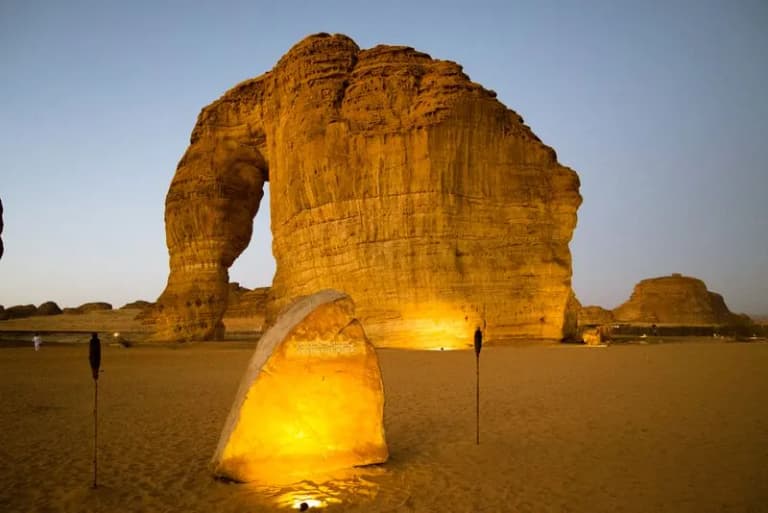
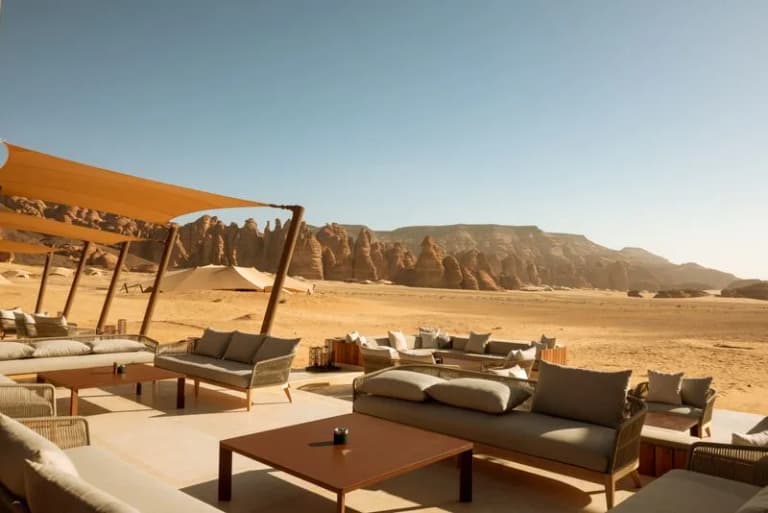
One of Al Ula's most iconic natural landmarks, Elephant Rock is a massive sandstone formation that naturally resembles an elephant with its trunk touching the ground. Standing approximately 171 feet (52 m) tall, the rock is particularly spectacular at sunset when the sandstone glows deep orange and red. A modern outdoor lounge area at the base offers food, drinks, and seating with views of the formation. Entry is free during the daytime, while the evening experience with food and beverages requires a booking. Arrive at least 30 minutes before sunset to secure a good spot.
Dadan was the capital of the ancient Dadanite and Lihyanite kingdoms (circa 9th to 2nd century BCE), predating the Nabataeans at Hegra by centuries. The ruins include rock-cut tombs with lion decorations unique to this site, a temple complex, and a residential area. Nearby Jabal Ikmahis known as the "open library," a canyon with thousands of inscriptions in Dadanitic, Lihyanite, Thamudic, Minaic, and Nabataean scripts carved into the rock faces over millennia. It is one of the most important epigraphic sites in the Arabian Peninsula. Both sites can be visited on a single ticket booked through experiencealula.com for approximately 50 SAR.
The abandoned Old Town of Al Ula (Al Deerah) is a labyrinth of over 900 mud-brick and stone houses built on a hillside, inhabited from at least the 12th century until the 1980s when residents moved to the modern town. The narrow alleyways, crumbling walls, and hilltop fort (Musa bin Nusair Castle) are atmospheric and evocative. The Old Town is being carefully restored and now includes a visitor center, heritage souq, and cultural spaces. Guided tours are available through Experience AlUla.
Maraya (meaning "mirror" in Arabic) is the world's largest mirrored building, holding a Guinness World Record. The 9,740-square-meter structure is clad entirely in reflective panels that mirror the surrounding desert landscape, making it appear to blend into the sandstone canyon. It functions as a concert and event venue with a capacity of approximately 500 people and hosts international performers during the AlUla season. Even when no events are scheduled, the exterior is worth seeing for its architectural spectacle.
Al Ula's remote desert location, minimal light pollution, and clear skies make it one of the best stargazing destinations in Saudi Arabia. Several operators offer organized stargazing experiences with telescopes and astronomy guides, typically starting after sunset in desert locations away from the town. During the winter months, the Milky Way is clearly visible to the naked eye. Some luxury resorts also offer private stargazing setups for guests.
AlUla's dramatic landscape of canyons, cliffs, and desert terrain provides a natural playground for adventure activities. All activities can be booked through experiencealula.com. Here is what is available and what it costs:
| Activity | What to Expect | Price | Duration |
|---|---|---|---|
| Zip-lining | Soar across a 300+ meter canyon at Harrat Viewpoint with panoramic valley views | From 200 SAR | 1 to 2 hours |
| Helicopter tour | Aerial views of Hegra, Elephant Rock, and sandstone canyons from above | From 800 SAR | 15 to 30 min |
| Rock climbing / Via Ferrata | Guided routes from beginner via ferrata to multi-pitch climbs on sandstone cliffs | From 250 SAR | 2 to 4 hours |
| Hiking / canyon walks | Marked trails through narrow slot canyons with dramatic sandstone walls | Free to 250 SAR | 1 to 5 hours |
| Hot air balloon | Dawn flights over the valley as sunrise illuminates the rock formations | From 1,200 SAR | About 1 hour |
| Horseback / camel riding | Explore desert and date palm groves, especially photogenic at sunset | From 300 SAR | 1 to 2 hours |
Zip-lining and hot air balloon rides are the most popular and sell out first during peak season. Book at least a week ahead if visiting between November and February.
AlUla has its own airport, Prince Abdul Majeed bin Abdulaziz Airport (IATA: ULH), located about 22 miles (35 km) from the town center. Direct flights operate from Riyadh (approximately 1.5 hours) and Jeddah (approximately 1.5 hours) on Saudia and flynas. During the AlUla tourism season from October to March, flight frequency increases with additional routes and charter flights. Prices range from 400 to 1,200 SAR return depending on timing and class. The airport is small and modern, with car rental desks and transfer services available on arrival.
The most popular road route is from Medina, approximately 186 miles (300 km) northwest on Route 375. The drive takes 3 to 4 hours on a good quality highway through desert landscape. This is a practical option if you are already visiting Mecca or Medina for Umrah. Rental cars are available at Medina airport and in the city center.
From Jeddah the drive is approximately 497 miles (800 km), about 8 hours via Medina. From Riyadh it is approximately 683 miles (1,100 km), 10 to 11 hours, usually done with an overnight stop in Medina or Ha'il. Both routes are on well-maintained highways. Fuel stations are available along the route but can be infrequent on some stretches, so fill up whenever you can.
Within AlUla, a rental car gives you the most flexibility. The major sites are spread across a 19 to 25 mile (30 to 40 km) stretch of the valley. Some sites (Hegra, Dadan) include bus transport as part of the ticket. Taxis and ride-hailing are limited in AlUla compared to major cities, so do not rely on them. Several tour operators offer guided day trips that include transport between sites. During the AlUla season, a free shuttle bus operates between some key locations.
AlUla's accommodation ranges from ultra-luxury desert resorts to budget-friendly guesthouses. During peak season from November to February, booking in advance is essential as the best properties sell out weeks ahead. Here is what each price level offers:
Habitas AlUla is the most talked-about property, a collection of eco-luxury villas nestled in a canyon with a spa, infinity pool, and farm-to-table restaurant. Banyan Tree AlUla offers private tented villas with plunge pools set among rock formations. Shaden Resort provides 5-star accommodation closer to the main sites. These properties range from 3,000 to 15,000+ SAR per night and offer curated guest experiences including private tours and dining.
Several 3 to 4 star hotels and boutique properties have opened in the AlUla town area, offering comfortable accommodation at 500 to 1,500 SAR per night. These include Sahary AlUla Resort, Aracari AlUla, and various serviced apartments. Most include breakfast and can arrange tours and activities.
Guesthouses, homestays, and basic hotels in AlUla town start from 200 to 400 SAR per night. These are simple but clean and functional, and put you close to local restaurants and shops. During the off-season (summer), prices drop significantly across all categories.
For a truly immersive experience, several operators offer desert camping in the AlUla area, from basic Bedouin-style camps to glamping setups with comfortable beds, private bathrooms, and gourmet dining under the stars. Prices range from 300 SAR for basic camping to 2,000+ SAR for luxury glamping. This is the best way to experience AlUla's spectacular night sky.
Al Ula has a desert climate with extreme temperature variations between seasons. The tourism season and the weather window largely overlap, so planning your trip around the cooler months is both more comfortable and more rewarding.
| Season | Months | Temperature | Rating |
|---|---|---|---|
| Peak season | November to February | 59 to 82°F (15 to 28°C) day, 41 to 54°F (5 to 12°C) night | Best |
| Shoulder season | October, March to April | 72 to 95°F (22 to 35°C) day, 54 to 68°F (12 to 20°C) night | Good |
| Summer | May to September | 100 to 118°F (38 to 48°C) day, 77 to 86°F (25 to 30°C) night | Avoid |
December and January are the most comfortable months for outdoor exploration but also the busiest and most expensive. October and March offer a good compromise with warm but manageable temperatures, fewer crowds, and lower prices. Night temperatures can drop significantly in winter (below 41°F (5°C) is possible), so bring warm layers for evening activities and stargazing.
The most important thing to organize in advance is booking your site tickets through experiencealula.com. All major sites including Hegra, Dadan, Jabal Ikmah, and the Old Town require timed-entry tickets, and popular morning slots sell out 1 to 2 weeks ahead during peak season. Combination tickets that cover multiple sites offer better value than buying individually.
Rent a car when you arrive. Public transport is virtually nonexistent in AlUla, and while some sites include bus transport as part of the ticket, having your own car gives you the flexibility to explore the valley at sunset, stop at viewpoints along the road, and visit restaurants and shops in town on your own schedule. Taxis and ride-hailing are unreliable outside the main town area.
Even in winter, the desert sun is strong, so carry at least 2 liters of water per person for site visits along with sunscreen, a hat, and sunglasses. However, do not neglect warm clothing either: desert temperatures drop sharply after sunset, especially from November through February, and a jacket or fleece is essential for stargazing, evening dining outdoors, or the early morning hot air balloon rides when it can be below 50°F (10°C).
Download offline maps for the AlUla region before arriving. Mobile data coverage is decent in the town center but patchy in some canyons and desert areas where you will be exploring. Finally, international visitors need a Saudi tourist eVisa (available online for 49+ countries at 300 SAR), but there are no additional permits required to enter the AlUla region itself.
AlUla has its own airport, Prince Abdul Majeed bin Abdulaziz Airport (ULH), with direct flights from Riyadh and Jeddah (both about 1.5 hours) on Saudia and flynas. You can also drive from Medina (approximately 186 miles / 300 km, 3 to 4 hours on a well-maintained highway) or from Jeddah (about 497 miles / 800 km, 8 hours). During the AlUla season from October to March, flight frequency increases significantly. Rental cars are available at the airport and in the town center.
The best time to visit Al Ula is from October to March when daytime temperatures are pleasant at 59 to 82°F (15 to 28°C) and nights are cool at 41 to 59°F (5 to 15°C). The main tourism season runs during these months, with the most events and activities available. December and January offer the most comfortable weather but are also the busiest. Summer months from June to September are extremely hot, with temperatures exceeding 113°F (45°C), and many attractions operate on reduced schedules or close entirely.
Yes, you need to book tickets through the official Experience AlUla website (experiencealula.com) or app to visit major sites like Hegra, Dadan, Jabal Ikmah, and the Old Town. Tickets are timed entries and include guided tours. Prices range from 95 SAR for Hegra to 50 SAR for other sites. Combination tickets offer better value. During peak season, book at least 1 to 2 weeks in advance as popular time slots sell out quickly. Driving around the AlUla valley and viewing rock formations from the road is free.
A minimum of 2 to 3 days is recommended to see the main sites: Hegra (half day), Dadan and Jabal Ikmah (half day), AlUla Old Town (2 to 3 hours), Elephant Rock at sunset (1 to 2 hours), and adventure activities like zip-lining or hiking (half day each). If you want a more relaxed pace with luxury resort time, stargazing, and multiple adventure activities, plan for 4 to 5 days. One day is too rushed to do AlUla justice.
AlUla is very safe for tourists, including solo travelers and women traveling alone. The area has been developed specifically for tourism under the Royal Commission for AlUla (RCU), with modern infrastructure, well-maintained roads, and a visible security presence at all major sites. The local community is welcoming to visitors. Standard travel precautions apply: stay hydrated in the heat, wear sun protection, and carry water when hiking.
Hegra, historically known as Mada'in Salih, is Saudi Arabia's first UNESCO World Heritage Site (inscribed 2008). It was the southern capital of the Nabataean Kingdom, the same civilization that built Petra in Jordan. The site features over 100 monumental rock-cut tombs dating from the 1st century BCE to the 1st century CE, carved into sandstone outcrops across a desert landscape. Unlike Petra, Hegra is far less crowded, and the tombs are remarkably well-preserved with intricate facades featuring eagles, columns, and inscriptions.
Budget travelers can visit Al Ula for around 500 to 800 SAR per day (basic hotel, site tickets, local food). Mid-range visitors should budget 1,200 to 2,500 SAR per day (boutique hotel, multiple activities, dining). Luxury travelers at resorts like Habitas or Banyan Tree can spend 5,000 to 15,000+ SAR per night for accommodation alone. Site entry tickets range from 50 to 95 SAR each. Adventure activities like zip-lining or helicopter tours cost 200 to 1,500 SAR. Flights from Riyadh or Jeddah run 400 to 1,200 SAR return.
Yes, AlUla is fully open to visitors of all faiths and nationalities. Unlike Mecca and Medina, there are no religious restrictions on visiting AlUla. The area is one of Saudi Arabia's flagship tourism destinations under Vision 2030 and actively welcomes international tourists. You can visit on a Saudi tourist eVisa, which is available to citizens of 49+ countries and can be obtained online in minutes.
Planning your AlUla trip? These guides cover related topics: