Loading...
Join our Facebook Group: Join: Expats in Saudi Arabia
Loading...
Everything you need to know about Ramadan in Saudi Arabia. Rules, Iftar, Suhoor, working hours, and how to make the most of the holy month as a non-Muslim.
By How to Saudi Arabia Editorial Team · Last updated:
Ramadan (Arabic: رمضان) is the ninth month of the Islamic lunar calendar and the holiest month in Islam, during which Muslims around the world fast from dawn (Fajr prayer) to sunset (Maghrib prayer) for 29 or 30 days, abstaining from food, water, smoking, and sexual relations during daylight hours. Fasting during Ramadan is one of the Five Pillars of Islam, making it obligatory for every adult Muslim who is physically able.
But Ramadan is far more than just abstaining from food and drink. It is a month of spiritual reflection, increased prayer, charitable giving, and community. Muslims believe the Quran was first revealed to Prophet Muhammad during Ramadan. The month is seen as an opportunity to develop self-discipline, empathy for the less fortunate, and a closer connection to God. Acts of charity (Sadaqah) increase dramatically during Ramadan - Saudis donate billions of riyals to charitable causes during this month.
In Saudi Arabia, Ramadan transforms the entire country. The rhythm of daily life shifts dramatically: the day becomes quiet and slow, and the night comes alive with energy, socializing, and celebration. Understanding this transformation is essential for anyone living in or visiting the Kingdom during the holy month.
| Year | Ramadan Start (Expected) | Ramadan End (Expected) | Eid al-Fitr (Expected) |
|---|---|---|---|
| 2026 | ~February 18-19 | ~March 19-20 | ~March 20-21 |
| 2027 | ~February 7-8 | ~March 8-9 | ~March 9-10 |
Exact dates depend on moon sighting and are confirmed by the Saudi Supreme Court 1-2 days before. Ramadan shifts approximately 10-11 days earlier each Gregorian year. In 2026, Ramadan falls in winter, meaning shorter fasting hours (~12 hours) and cooler temperatures - a much easier experience than summer Ramadans.
Fasting hours in Saudi Arabia depend on location. In Riyadh during a February/March Ramadan, fasting is approximately from 5:15am to 5:45pm(~12.5 hours). Summer Ramadans (which won't occur again until the 2040s) can mean 15+ hours of fasting in extreme heat.
Non-Muslims are not required to fast during Ramadan, but they must respect certain rules in public. These are legally enforceable and taken seriously in Saudi Arabia.
During fasting hours you must not eat or drink anything in public spaces, on the street, in your car if it is visible to others, or in shared workplaces, and this includes food, water, coffee, and any other beverage. Smoking and vaping are equally prohibited in all public areas, as is chewing gum, which people often forget falls under the same restriction. Loud music is generally discouraged in public during Ramadan, particularly during prayer times, so keep any personal audio at a discreet volume.
You are free to eat and drink without restriction in your own home or apartment, and many companies set up a designated private room in the office where non-fasting employees can eat discreetly during the day. International hotels often continue serving daytime meals to guests behind screens or in closed areas, though it is worth checking with your specific hotel in advance, and expat residential compounds typically allow normal eating in their common areas throughout Ramadan.
Dress more conservatively than usual during Ramadan. Cover shoulders and knees. Avoid tight, revealing, or flashy clothing in public. This applies to both men and women. Think of it as the dress code you'd adopt when visiting a religious site - modest, respectful, understated.
The golden rule:
Even if enforcement has become less strict in recent years, showing respect for Ramadan is not just about following rules - it's about being a considerate guest in a country that takes this month very seriously. Your Saudi colleagues and neighbors will deeply appreciate your respect, and it's one of the easiest ways to build goodwill and genuine relationships.
The daily rhythm during Ramadan is completely different from the rest of the year. Life essentially becomes nocturnal.
| Time | What Happens |
|---|---|
| ~4:30am | Suhoor - pre-dawn meal. Families eat before Fajr prayer. Restaurants serving Suhoor close. |
| ~5:15am | Fajr prayer / Fast begins - no more eating or drinking until sunset. |
| 6am-10am | Early morning - some people go back to sleep after Fajr. Streets are very quiet. |
| 10am-3/4pm | Work hours - reduced schedule. Pace is slow. Meetings are shorter. Productivity varies. |
| 3pm-5:30pm | Pre-Iftar preparation - traffic gets heavier as people rush home. Supermarkets busy. Stay off the roads 30 min before Iftar. |
| ~5:45pm | Iftar - the fast is broken. The adhan (call to prayer) signals Maghrib prayer. Streets go silent as everyone eats. This is the most special moment of the day. |
| 6:30-8pm | Post-Iftar - family time, mosque prayers (Isha and Taraweeh). Some people nap. |
| 8pm-2am | Night comes alive - malls open (until 1-2am), restaurants packed, social gatherings, shopping, entertainment. This is peak social time. |
| 2am-4:30am | Suhoor time - restaurants and cafes serving Suhoor. Families and friends gather for the late-night meal before the next fast begins. |
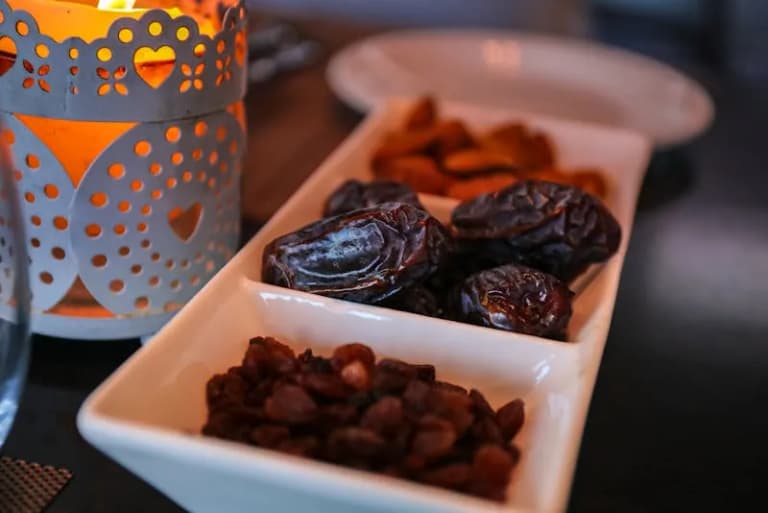
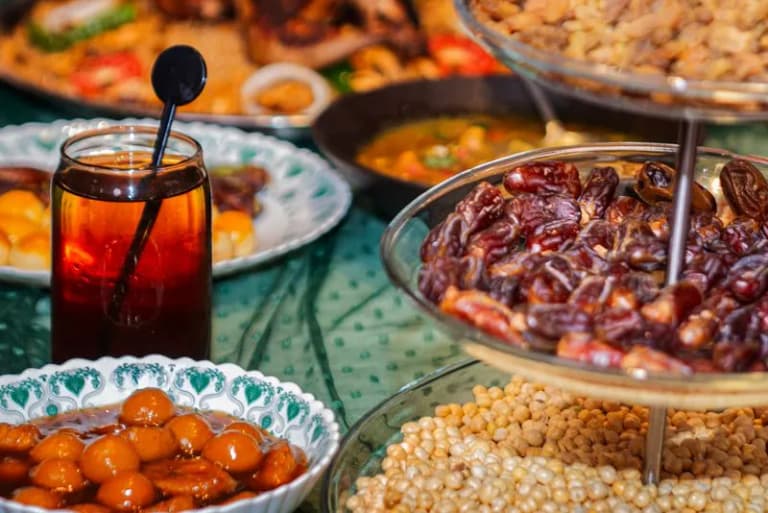
Iftar is the most important meal of Ramadan, and the fast is traditionally broken with dates and water following the Sunnah of Prophet Muhammad, after which Maghrib prayer is performed and a full meal follows. In Saudi Arabia, Iftar is a generous and communal affair that takes many forms. Home Iftars see families preparing elaborate spreads of sambusa (samosas), shorba (soup), rice dishes, grilled meats, salads, and a variety of sweets, and it is common to host extended family and neighbours to share the meal. Most mosques across Saudi Arabia provide free Iftar meals to anyone regardless of faith, with large mosques serving hundreds or even thousands of people each evening. Companies organise team Iftar dinners at restaurants to strengthen workplace bonds, and if you are invited you should absolutely attend, as it is a genuine sign of inclusion. Luxury hotels offer elaborate Iftar buffets ranging from 150 to 400 SAR per person with live cooking stations and traditional entertainment, and across the streets of every city, volunteers distribute free Iftar meals at traffic lights, construction sites, and labour camps, ensuring that nobody breaks their fast alone.
Suhoor is the meal eaten before dawn, before the fast begins, and while it is lighter than Iftar it is socially significant, especially on weekends when families and friends gather at restaurants and cafes that stay open until 3 or 4am with special Suhoor menus. The quintessential Suhoor dish is ful medames, slow-cooked fava beans with olive oil, lemon, and spices, and it is usually accompanied by eggs served scrambled, fried, or as shakshuka (eggs in tomato sauce), bread with labneh(thick strained yogurt drizzled with olive oil and za'atar), dates and Arabic coffee, and fruit and yogurt to provide hydration for the long fast ahead.
The Suhoor social scene is one of Ramadan's hidden gems. Groups of friends sitting at outdoor cafes at 2am, drinking tea, eating ful, and talking - it's a relaxed, uniquely Ramadan atmosphere that many expats come to love.
Saudi labor law mandates reduced working hours during Ramadan for Muslim employees: a maximum of 6 hours per day or 36 hours per week. In practice, most employers apply these reduced hours to all employees regardless of religion.
| Sector | Typical Ramadan Hours |
|---|---|
| Government offices | 10:00am - 3:00pm (some 10:00am - 2:00pm) |
| Private companies | 10:00am - 4:00pm or 10:00am - 5:00pm (varies) |
| Banks | 10:00am - 2:00pm (very short hours) |
| Hospitals / healthcare | Normal hours (24/7 for emergency services) |
| Malls / retail | 1:00pm - 1:00/2:00am (open very late) |
| Restaurants | Closed during day. Open from Iftar (~6pm) until Suhoor (~3-4am) |
| Supermarkets | Open but with modified hours. Busiest before Iftar. |
Productivity in offices tends to be lower during Ramadan, especially in the last hours before Iftar when energy levels drop. Many business decisions and approvals are delayed. If you have important deadlines or government paperwork, try to complete it before Ramadan begins or plan for delays.
Traffic patterns shift dramatically. Roads are quiet in the morning, then get increasingly congested from 3pm onward as people rush home for Iftar. The 30 minutes before Iftar are the most dangerous time to drive - people race home and attention spans are at their lowest. Immediately after Iftar, roads empty for about an hour, then fill again as people head out for the evening. Late-night traffic (10pm-1am) is heavier than usual as malls and social venues stay open late.
Malls and shopping centers transform during Ramadan. They open later (typically 1pm), but stay open until 1-2am, creating a vibrant nighttime shopping culture. Many malls organize Ramadan decorations, cultural events, and special promotions. Cinemas continue operating with adjusted schedules. Live entertainment events are more subdued during the day but can be lively at night.
Ramadan brings a palpable spiritual energy to Saudi Arabia. The call to prayer feels more significant. Mosques are fuller, with Taraweeh prayers(special Ramadan evening prayers) drawing large congregations. Quran recitation echoes from homes and mosques. Acts of charity are everywhere - from free Iftar distributions to clothing drives. The generosity is genuine and moving. Even if you're not Muslim, the atmosphere of collective devotion and community is deeply impressive.
Ramadan is the biggest TV seasonin the Arab world - equivalent to sweeps week in the US or the Christmas TV schedule in the UK. Saudi and Arab networks premiere their most anticipated drama series, comedies, and reality shows during Ramadan. Families gather after Iftar to watch these shows together. Major advertisers launch their biggest campaigns. The cultural importance of Ramadan TV cannot be overstated - it's a national shared experience.
Stock up on groceries and water before Ramadan starts, as supermarkets become extremely crowded in the days leading up to the holy month and certain items like dates, Arabic coffee, and sambusa wrappers tend to sell out fast. If you can, adjust your sleep schedule gradually by shifting to sleeping later and waking later, and many expats find that a 1am to 9am sleep pattern works well during Ramadan.
Accept every Iftar invitation you receive from Saudi colleagues and neighbours, as this is when genuine cross-cultural friendships are built, and bring a small gift such as dessert, chocolate, or dates when visiting someone's home. At work, keep a water bottle in your desk drawer and eat discreetly, making an effort not to eat in front of fasting colleagues if you can avoid it. Be patient with slower service, reduced business hours, and tired employees, as everyone is adjusting to dramatically altered sleep and eating patterns, and avoid scheduling important meetings for the last 2 hours before Iftar, when concentration levels drop noticeably.
Avoid driving in the 30 minutes before Iftar, as this is statistically the most dangerous time on Saudi roads during Ramadan, with drivers rushing home and attention spans at their lowest. If you are curious, try fasting for a day out of solidarity, as many non-Muslim expats do this and your Saudi colleagues will be genuinely delighted and supportive. Make time to explore the Suhoor culture of late-night gatherings at restaurants and cafes, which is a uniquely relaxed and atmospheric Ramadan experience, and learn the key phrases: "Ramadan Kareem" (Generous Ramadan), "Ramadan Mubarak" (Blessed Ramadan), and "Taqabbal Allah" (May God accept your worship).
The last 10 nights of Ramadan are considered the most sacred period of the entire Islamic year. Muslims believe that one of these nights is Laylat al-Qadr(the Night of Power/Decree) - the night when the Quran was first revealed to Prophet Muhammad. The Quran states that worship on this single night is "better than a thousand months" (Quran, 97:3).
During the last 10 nights, spiritual intensity reaches its peak. Many Muslims perform I'tikaf - a spiritual retreat where they stay in the mosque for the entire 10-day period, spending their time in prayer, Quran recitation, and reflection. Masjid al-Haram in Mecca and Masjid an-Nabawi in Medina are packed to maximum capacity during these nights, with millions of worshippers seeking Laylat al-Qadr.
For expats, the last 10 nights mean even later nights, more intense spiritual activity, and a palpable sense of anticipation. Charitable giving peaks during these nights. The atmosphere in Saudi Arabia during this period is unlike anything else - a combination of spiritual fervor, generosity, and community that is profoundly moving regardless of your personal faith.
The end of Ramadan is marked by Eid al-Fitr, the joyous celebration that follows a month of fasting.
Ramadan 2026 is expected to begin around February 18-19, 2026, and end around March 19-20, 2026, followed by Eid al-Fitr. The exact start date depends on the sighting of the crescent moon, confirmed by the Saudi Supreme Court 1-2 days before. Ramadan shifts approximately 10-11 days earlier each year on the Gregorian calendar because it follows the Islamic lunar calendar.
Non-Muslims are not required to fast during Ramadan, but eating, drinking, or smoking in public during fasting hours (dawn to sunset) is prohibited by law and considered very disrespectful. You can eat and drink privately in your home, office (if discreet), or at designated areas in some hotels and compounds. Some restaurants in hotels and international compounds remain open during the day for non-fasting guests, though options are limited. After sunset (Iftar time), all restaurants open and you can eat freely.
Yes, working hours are legally reduced during Ramadan. For Muslim employees, the maximum is 6 hours per day or 36 hours per week (compared to the normal 8 hours/48 hours). Non-Muslim employees technically work normal hours, but in practice most companies reduce hours for everyone. Government offices typically operate from 10am to 3pm. Most private companies work 10am to 4pm or 5pm. Many businesses shift their schedules later, with some offices starting at noon and working until 8pm. Shopping malls and retail stores open late (often 1pm) and stay open until 1-2am.
If you eat or drink in public during fasting hours, you may receive a warning from police or members of the public. In theory, it can result in a fine or even brief detention, though enforcement has become less strict in recent years, especially in international settings. The best approach is to simply be mindful: eat and drink privately, don't chew gum in public, and avoid smoking on the street. Most workplaces have designated areas where non-fasting employees can eat discreetly. Genuine accidents are usually met with understanding rather than punishment.
It depends on what you're looking for. Ramadan offers a unique cultural experience that's impossible to replicate at any other time - the Iftar meals, the spiritual atmosphere, the late-night energy, and the generosity of the season are extraordinary. However, daytime tourism is limited: restaurants are closed, attractions have reduced hours, and the general pace is slower. Evenings come alive after Iftar, with bustling markets, special Ramadan events, and a festive atmosphere. If you're open to adapting your schedule (sleep late, eat at sunset, explore at night), Ramadan can be one of the most memorable times to visit.
Iftar is the meal eaten at sunset to break the fast. It's a significant social and religious moment. In Saudi Arabia, Iftar ranges from simple dates and water to elaborate buffets at mosques, hotels, and family homes. Yes, non-Muslims are absolutely welcome at Iftar gatherings. Many mosques serve free Iftar meals to anyone, regardless of religion. Companies organize team Iftars. Neighbors invite each other. Hotels offer special Iftar buffets. Attending an Iftar is one of the best cultural experiences available in Saudi Arabia - accept every invitation you receive.
Suhoor (also spelled Sahur or Sehri) is the pre-dawn meal eaten before the fast begins each day. In Saudi Arabia, Suhoor is a social occasion, especially on weekends - families and friends gather at restaurants and cafes that stay open until 3-4am. Traditional Suhoor foods include ful medames (fava bean stew), eggs, bread, yogurt, fruits, and plenty of water. Many restaurants offer special Suhoor menus. The atmosphere at Suhoor gatherings is relaxed and social - it's a unique late-night Saudi experience during Ramadan.
Dress more conservatively during Ramadan than you might at other times. For men: long trousers and shirts with sleeves (avoid tank tops and shorts in public). For women: loose-fitting clothing covering arms and legs, plus a headscarf is appreciated (though not legally required for non-Muslim women). Avoid flashy, revealing, or tight-fitting clothing. In general, dress as if you're visiting a religious site. This applies especially during the day and near mosques. After Iftar, the dress expectations relax somewhat, especially in malls and entertainment venues.
The celebrations after Ramadan: Eid al-Fitr traditions, Eidiya, food, and events.
Traditional Saudi dishes including Iftar and Suhoor specialties.
Culture, religion, and society in the Kingdom.
Complete expat guide to relocating and settling in.