Loading...
Join our Facebook Group: Join: Expats in Saudi Arabia
Loading...
Everything you need to know about language in Saudi Arabia. Arabic dialects explained, essential everyday phrases, how widely English is spoken, and how to start learning.
By How to Saudi Arabia Editorial Team · Last updated:
Arabicis the official and national language of Saudi Arabia, serving as the language of government, law, education, media, and daily life for the country's 22 million Saudi citizens, but the linguistic reality on the ground is considerably more nuanced than that simple statement might suggest.
In practice, Saudi Arabia operates with three distinct language layers that serve very different purposes. Modern Standard Arabic (MSA / Fusha) is the formal, literary form used in official documents, news broadcasts, books, and the education system, and while every Saudi learns it in school, nobody speaks it in casual conversation. Saudi Arabic dialects (Ammiyya) are the actual spoken language of everyday life, and they vary significantly by region, so a native of Riyadh and a native of Jeddah can sound noticeably different from one another. English functions as a de facto second language, widely used in business, technology, healthcare, and international communication, with most educated Saudis speaking it at a functional to fluent level.
For the over 13 million expatriates living in Saudi Arabia, who make up roughly a third of the total population, the language landscape becomes even more diverse, with Hindi, Urdu, Tagalog, Bengali, and Indonesian spoken daily in homes, shops, and workplaces across the Kingdom, and in some neighbourhoods of Riyadh and Jeddah you might easily hear five or six languages within a single city block.
Understanding the difference between Modern Standard Arabic (MSA) and spoken Saudi dialect is crucial for anyone planning to learn Arabic or live in Saudi Arabia.
MSA is the standardized, formal version of Arabic shared across the entire Arab world - from Morocco to Iraq. It's the language of the Quran, Arabic literature, news broadcasts, academic publications, and official government communications. Every Arab child learns MSA in school. It's the "correct" form of Arabic that unites 400+ million Arabic speakers across 22 countries.
However, nobody speaks MSA in casual conversation. Using MSA in a normal chat would sound as unnatural as speaking in Shakespearean English at a coffee shop. Saudis can understand it perfectly and will switch to it in formal contexts (speeches, presentations, writing), but they don't use it to order coffee, chat with friends, or negotiate with a shopkeeper.
Saudi Arabic is what people actually speak. It differs from MSA in pronunciation, vocabulary, grammar, and even sentence structure. Some examples:
| English | MSA (Fusha) | Saudi dialect |
|---|---|---|
| What do you want? | Maza tureed? | Esh tabgha? (Najdi) / Esh tabi? (Hejazi) |
| How are you? | Kayfa haluk? | Keef halak? / Esh akhbarak? |
| Now | Al-aan | Dahin / Heen |
| A lot / Very | Katheeran | Waajid / Marrah |
| Good | Jayyid | Zain / Tamam |
Which should you learn?
If you're living in Saudi Arabia, learn the Saudi dialect first. It's what you'll hear and need in daily life. MSA is useful for reading signs, documents, and news, but it won't help you chat with your neighbor or order at a restaurant. Many language courses teach MSA because it's "standard," but for practical life in the Kingdom, dialect is far more useful.
Saudi Arabia is a vast country with distinct regional dialects. While all are mutually intelligible (Saudis from different regions can understand each other), the differences in accent, vocabulary, and expressions are notable.
Spoken in Riyadh, Buraidah, Ha'il, and the central Najd plateau. This is the most widely understood Saudi dialect thanks to Riyadh's dominance in media and government. Najdi Arabic is considered relatively close to Classical Arabic compared to other dialects. Key features include pronouncing the letter "qaf" as a hard "g" sound (so "qahwa" becomes "gahwa" for coffee) and using distinctive vocabulary like "waajid" (a lot), "dahin" (now), and "yal'an" (let's go). If you learn one Saudi dialect, Najdi is the most practical.
Spoken in Jeddah, Mecca, Medina, and along the Red Sea coast. Hejazi is considered one of the most melodic and accessible Saudi dialects for foreigners to learn. It has absorbed loanwords from Turkish, Persian, and East African languages due to centuries of Hajj pilgrimage bringing people from across the Muslim world. The "qaf" is often pronounced as a glottal stop ('a). Hejazi speakers tend to sound softer and less guttural than Najdi speakers. Key vocabulary includes "daghri" (straight ahead, from Turkish), "kida" (like this), and "lessa" (not yet).
Spoken in Dammam, Khobar, Dhahran, and Jubail. This dialect is closely related to the Arabic spoken in Kuwait, Bahrain, Qatar, and the UAE. It features heavy use of the "ch" sound for the letter "kaf" (so "kaif" becomes "chaif" for "how"). Vocabulary overlaps significantly with other Gulf states. This is useful if you work in the oil and gas industry, as the Eastern Province is the heart of Saudi Aramco operations.
The southern regions have their own distinctive dialects that can be challenging even for other Saudis to understand. These dialects preserve some archaic Arabic features and have been influenced by neighboring Yemeni Arabic. The Jizan region also has communities speaking Khawlani and Faifi, which are South Arabian languages distinctly different from Arabic.
| Dialect | Region | Key Features | Difficulty for Learners |
|---|---|---|---|
| Najdi | Riyadh, central region | "Qaf" → "G", close to Classical Arabic | Moderate - most resources available |
| Hejazi | Jeddah, Mecca, Medina | "Qaf" → glottal stop, many loanwords | Easier - considered most accessible |
| Gulf (Sharqi) | Dammam, Eastern Province | "Kaf" → "Ch", shared with Kuwait/Bahrain | Moderate - similar to other Gulf dialects |
| Southern | Abha, Jizan, Najran | Archaic features, Yemen influence | Harder - fewer learning resources |
English has no official status in Saudi Arabia, but it functions as the country's de facto second language. Its prevalence varies dramatically depending on the context.
English functions smoothly in corporate environments, where multinational companies, banks, consulting firms, and tech companies conduct meetings, write emails, and produce documentation almost entirely in English. Healthcare is another area where English dominates, since hospitals and clinics employ large numbers of foreign doctors and nurses for whom English serves as the common working language. Staff at international hotels, airports, and tourist attractions speak English as a matter of course, and major shopping malls in Riyadh, Jeddah, and Dammam employ English-speaking staff, particularly in international brand stores. Many Saudi universities, including KAUST, KFUPM, and Alfaisal, teach their programmes in English, and most apps, websites, and digital services in the Kingdom are available in both Arabic and English.
English is of limited use in government offices such as the Jawazat (passport office), traffic police stations, municipalities, and courts, where forms, procedures, and staff communication are conducted almost exclusively in Arabic. Local markets, souks, and neighbourhood bakeries typically operate with Arabic-only signage and Arabic-speaking staff, and many taxi drivers and delivery workers speak Arabic, Urdu, or Hindi but only limited English, though ride-hailing apps like Uber and Careem solve this by showing destination maps directly. Negotiating with landlords, requesting maintenance, and dealing with building management often requires Arabic or a bilingual intermediary, and outside the major urban centres, English proficiency drops significantly. Legal and bureaucratic matters present a particular challenge, as contracts, lease agreements, and legal documents are written in Arabic, making notarised translations standard practice for expats navigating the system.
There's a clear generational gap. Saudis under 35, especially those with university education, generally speak good English - many have studied abroad or consume English-language media. Older generations are less likely to be comfortable in English. The Saudi government has invested heavily in English education, and it's now taught from primary school. The younger generation growing up with YouTube, Netflix, and social media in English has noticeably stronger English skills than previous generations.
These phrases will cover the majority of basic daily interactions. Pronunciations are approximate - Arabic has sounds that don't exist in English.
| English | Arabic (transliterated) | When to use |
|---|---|---|
| Peace be upon you | As-salamu alaykum | Universal greeting, use always. Reply: Wa alaykum as-salam |
| Good morning | Sabah al-khayr | Morning greeting. Reply: Sabah an-noor |
| Good evening | Masa al-khayr | Evening greeting. Reply: Masa an-noor |
| How are you? | Keef halak? (m) / Keef halik? (f) | Standard follow-up to greeting. Reply: Al-hamdulillah (Praise God, I'm well) |
| Thank you | Shukran | Universal. "Shukran jazeelan" = Thank you very much |
| You're welcome | Afwan | Standard reply to Shukran |
| Yes / No | Na'am (or Aiwa) / La | Aiwa is more colloquial, Na'am more formal |
| Please | Min fadlak (m) / Min fadlik (f) | Or more casually: Law samaht |
| Excuse me / Sorry | Afwan / Aasif | Afwan for "excuse me," Aasif for "I'm sorry" |
| Goodbye | Ma'a as-salamah | Literally "Go with peace." Also: Allah yisallmak |
| English | Arabic (transliterated) |
|---|---|
| How much is this? | Kam hada? / Bi kam? |
| Where is...? | Wayn...? |
| I want... | Abgha... (Najdi) / Abi... (Hejazi) |
| I don't understand | Ma afham |
| I don't speak Arabic | Ma atakallam Arabi |
| Do you speak English? | Tatakallam Ingleezi? |
| The bill, please | Al-hisab, law samaht |
| Left / Right / Straight | Yasaar / Yameen / Seedah |
| Water / Coffee / Tea | Moya / Gahwa / Shai |
These are expressions rooted in Islamic culture that permeate daily conversation in Saudi Arabia. Understanding them is essential - you'll hear them dozens of times a day, from every Saudi you interact with.
| Expression | Literal meaning | When it's used |
|---|---|---|
| Inshallah | God willing | Used for any future plan. "See you tomorrow?" "Inshallah." Can mean genuine hope or polite avoidance - context matters. |
| Mashallah | God has willed it | Used when admiring something or someone. "Your children are beautiful, mashallah." Protects against the evil eye. |
| Al-hamdulillah | Praise be to God | Used to express gratitude or satisfaction. "How are you?" "Al-hamdulillah." Also used after eating or recovering from illness. |
| Yalla | Let's go / Come on | Universal motivator. "Yalla, we're late." "Yalla yalla" = hurry up. Extremely common. |
| Khalas | Enough / Done / Finished | "Khalas, I'm done eating." "Khalas, stop talking about it." End of discussion. |
| Bismillah | In the name of God | Said before eating, starting a task, or beginning a journey. Shows you're starting with God's blessing. |
| Jazak Allahu khayran | May God reward you with good | A deeper "thank you" with spiritual weight. Used for significant favors. |
| Habibi / Habibti | My dear / My love (m/f) | Used casually between friends, colleagues, even strangers. "Habibi, can you help me?" Not romantic in casual use. |
| Wallahi | I swear by God | Used for emphasis. "Wallahi, the traffic was terrible." Very common in casual speech. |
The "Inshallah" spectrum:
Understanding what "Inshallah" means in context is an essential skill. "Inshallah, tomorrow at 9am" = genuine commitment. "Inshallah..." (with a pause and vague tone) = probably not happening. "Inshallah, bukra" (God willing, tomorrow) when said about bureaucratic processes = could be days or weeks. Learning to read the intention behind "Inshallah" is a rite of passage for every expat in Saudi Arabia.
Knowing numbers in Arabic is essential for shopping, taxis, and any situation where prices are discussed. Arabic numerals (1, 2, 3...) are actually called "Hindu-Arabic numerals" - the Arabic-script numerals look different.
| Number | Arabic script | Pronunciation |
|---|---|---|
| 1 | ١ | Wahid |
| 2 | ٢ | Ithnayn |
| 3 | ٣ | Thalatha |
| 4 | ٤ | Arba'a |
| 5 | ٥ | Khamsa |
| 6 | ٦ | Sitta |
| 7 | ٧ | Sab'a |
| 8 | ٨ | Thamania |
| 9 | ٩ | Tis'a |
| 10 | ١٠ | Ashara |
Beyond the basics, you will need to know that 100 is Mi'a and 1,000 is Alf, and for shopping situations there are a handful of essential phrases: "Ghali" or "Ghali waajid" means "too expensive," while "Nazzil shwayya" asks for a discount and "Akhir si'r?" means "what's your final price?" If you want to state what you are willing to pay, say "Adfa'" followed by the number.
Bargaining tip:
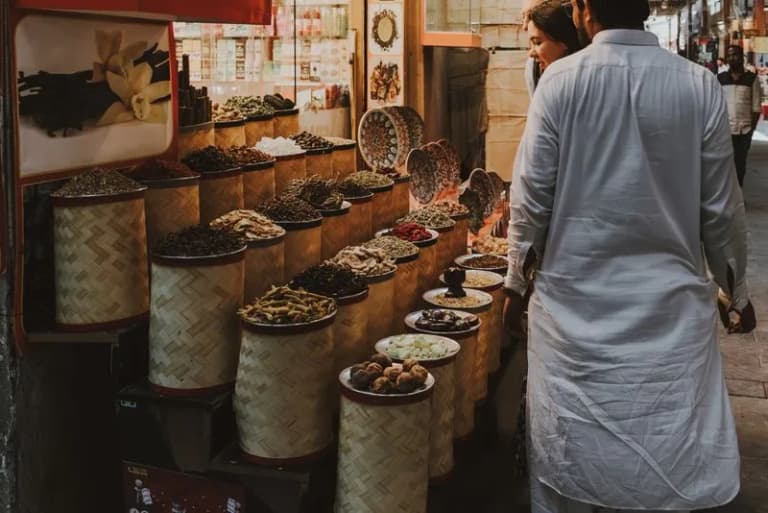
Bargaining is expected in souks (traditional markets) and with independent vendors, but not in malls, supermarkets, or chain stores where prices are fixed. In souks, start by offering 40-50% of the asking price and work toward a middle ground. Always smile, be friendly, and be willing to walk away - the shopkeeper will often call you back with a better offer.
The Arabic Language Institute at King Saud University in Riyadh runs a highly regarded intensive programme for international students, while the Islamic University of Medina offers a free Arabic programme for Muslim students that includes a scholarship covering tuition and living expenses. Private language schools like Berlitz and the British Council offer general and business Arabic courses in major cities, and the well-known Qasid Institute provides both online and in-person options for structured learning. Many large employers, including Saudi Aramco, SABIC, and major hospitals, also offer company-sponsored Arabic classes for their international staff as part of their onboarding or professional development programmes.
Language apps like Duolingo (for MSA), Mondly (which includes Saudi Arabic content), ArabicPod101 (particularly good for dialect), and Anki (for vocabulary flashcards) provide flexible daily practice that fits around a busy schedule. YouTube channels like "Learn Arabic with Maha" and "ArabicPod101" have Saudi dialect content, while platforms like iTalki connect you with Saudi Arabic tutors for one-on-one practice sessions at around 30 to 80 SAR per hour. For immersive exposure, watching Saudi TV series on the Shahid streaming platform with subtitles is an excellent way to absorb natural dialect patterns, and following Saudi creators on Twitter/X, YouTube, and TikTok provides daily immersion in both written and spoken Saudi Arabic.
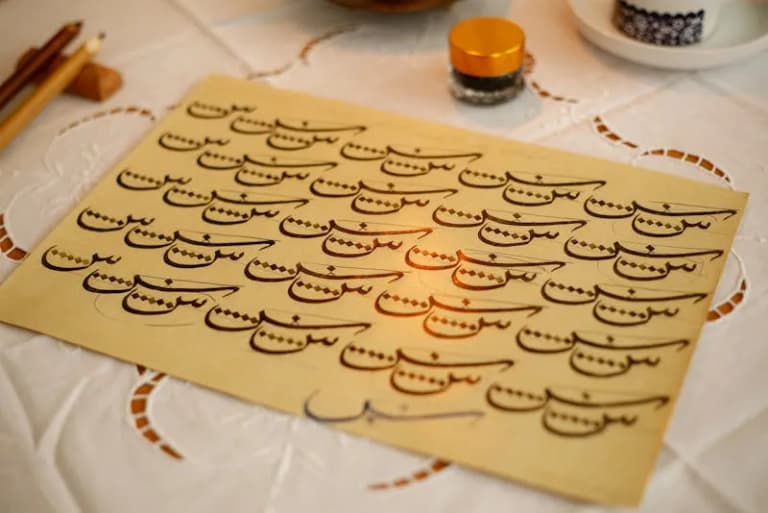
The single most impactful first step is to learn the Arabic script, which takes just 2 to 4 weeks of dedicated practice and immediately unlocks your ability to read signs, menus, apps, and official documents. Focus your conversational studies on Saudi dialect rather than MSA, since MSA is useful for reading but will not help you in everyday conversation, and start by learning the greetings and Islamic expressions covered in this guide, as these alone cover a remarkable percentage of daily interactions. Practice with Saudis whenever you can, because they are almost universally encouraging and patient with learners and many will enthusiastically teach you new words on the spot. Above all, do not be afraid of making mistakes, since Saudis appreciate the effort of trying to speak their language far more than they judge the accuracy of your pronunciation.
Saudi Arabia's massive expatriate population makes it one of the most linguistically diverse countries in the Middle East. Here are the most commonly spoken non-Arabic languages:
| Language | Community | Where you'll hear it |
|---|---|---|
| Urdu / Hindi | Indian and Pakistani workers (~4 million) | Markets, restaurants, construction, services |
| Tagalog | Filipino workers (~1.5 million) | Healthcare, retail, hospitality, domestic work |
| Bengali | Bangladeshi workers (~2 million) | Construction, cleaning, food delivery |
| Indonesian / Malay | Indonesian workers (~1 million) | Domestic work, hospitality, services |
| Amharic / Tigrinya | Ethiopian/Eritrean workers | Domestic work, cafes, services |
| French | North African expats (Morocco, Tunisia, Algeria) | Professional settings, some communities |
In practical terms, knowing Urdu or Hindi can be almost as useful as Arabic in certain daily contexts in Saudi Arabia - many shops, restaurants, and services in expatriate-heavy neighborhoods operate primarily in these languages.
Arabic is the sole official language of Saudi Arabia. Specifically, Modern Standard Arabic (MSA / Fusha) is used in government, legal proceedings, education, media, and official documents. However, in daily conversation, Saudis speak their regional Arabic dialects, which differ significantly from MSA. English is widely used as a second language in business, healthcare, and international settings, but it has no official status.
In major cities like Riyadh, Jeddah, and Dammam, you can manage many daily situations in English, especially in corporate environments, hospitals, international schools, malls, and restaurants. However, relying solely on English has limitations: government offices, local markets, taxi drivers, landlords, and smaller businesses often communicate only in Arabic. Learning basic Arabic phrases for greetings, numbers, directions, and common requests will significantly improve your daily life and build rapport with Saudis, who deeply appreciate any effort to speak their language.
Saudi Arabia has several regional dialects. The most widely understood is Najdi Arabic, spoken in the central region including Riyadh. Hejazi Arabic is spoken along the western coast (Jeddah, Mecca, Medina). Gulf Arabic is spoken in the Eastern Province (Dammam, Khobar). Southern dialects are spoken in Asir, Najran, and Jizan. All Saudis understand Modern Standard Arabic and can usually understand other Saudi dialects, though vocabulary and pronunciation differ noticeably between regions.
Arabic is classified as a Category IV language by the US Foreign Service Institute, meaning it's one of the most challenging languages for English speakers, typically requiring 2,200+ hours of study for professional proficiency. However, learning conversational Saudi dialect for daily life is much more achievable. Many expats reach a functional level within 6-12 months of regular practice. The Arabic script takes 2-4 weeks to learn. Grammar is complex but highly systematic. Pronunciation has sounds that don't exist in English (like the 'ain and guttural 'h'). The biggest advantage: Saudis are extremely encouraging and patient with anyone trying to speak Arabic.
While not strictly necessary, learning Arabic script is highly recommended and relatively easy (the alphabet has 28 letters and can be learned in 2-4 weeks). Being able to read signs, menus, labels, and official documents gives you significant independence. Road signs are bilingual (Arabic and English), but many local shops, restaurants, and government forms are Arabic-only. Even basic reading ability helps with navigating apps like Absher, understanding utility bills, and reading product labels in supermarkets.
Due to its large expatriate population (over 13 million foreign workers), Saudi Arabia is linguistically diverse. After Arabic and English, the most commonly spoken languages are: Urdu/Hindi (spoken by the large South Asian community), Tagalog (Filipino workers), Bengali, Indonesian, and Amharic/Tigrinya (Ethiopian/Eritrean workers). In the southern Jizan region, some communities speak Khawlani or Faifi, which are South Arabian languages distinct from Arabic. You'll regularly hear multiple languages in malls, markets, and public transport.
Yes, many options exist. The Arabic Language Institute at King Saud University in Riyadh and the Islamic University of Medina offer intensive Arabic programs for international students. Private language schools like Berlitz, British Council, and local institutes offer evening and weekend classes in major cities. Many mosques offer free Arabic classes for Muslim expats. Online platforms like iTalki connect you with Saudi Arabic tutors for dialect-specific practice. Several apps (Duolingo, Mondly, ArabicPod101) have Saudi/Gulf Arabic content. Corporate Arabic courses are common in large companies.
Start with these essential phrases: 'As-salamu alaykum' (Peace be upon you - universal greeting), 'Shukran' (Thank you), 'La' (No), 'Na'am/Aiwa' (Yes), 'Kam?' (How much?), 'Wayn...?' (Where is...?), 'Mumkin...?' (Can I...?/Is it possible...?), 'Inshallah' (God willing - used constantly), 'Mashallah' (God has willed it - used for compliments), 'Yalla' (Let's go/Come on), and 'Khalas' (Enough/Done/Finished). These ten phrases will cover a surprising percentage of daily interactions and immediately signal respect for the culture.
Complete expat guide to relocating, visas, housing, and settling in.
Business etiquette, office culture, and professional communication in Saudi Arabia.
Culture, religion, society, and everything you need to know about the Kingdom.
What life is really like for foreigners living and working in the Kingdom.