
Loading...
Join our Facebook Group: Join: Expats in Saudi Arabia
Loading...
Complete step-by-step guide to moving to Saudi Arabia for all nationalities. Learn how employer-sponsored work visas and the Iqama work, plus Premium Residency, family sponsorship, and finding a job.
Saudi Arabia is home to more than 13 million foreign residents, making it one of the largest expat destinations in the world. Under Vision 2030 the Kingdom is opening up rapidly, and demand for international talent across construction, healthcare, engineering, technology, hospitality, and finance continues to grow.
Whether you are from India, the Philippines, Pakistan, the United Kingdom, or anywhere else, this guide explains how relocation to Saudi Arabia actually works. Almost everyone who moves to the Kingdom to work does so through the sponsorship system: a Saudi employer sponsors your work visa, and once you arrive that status is converted into an Iqama (residence permit). Below we walk through each step and link to detailed, nationality-specific guides.
Saudi Arabia offers real advantages for international workers. There is no personal income tax on salaries, so a larger share of your pay is take-home. Employers commonly provide housing or a housing allowance, annual flights home, and medical insurance as part of expat packages. The Premium Residency program (often called the "Saudi Green Card") now allows qualifying individuals to live and work without a traditional employer sponsor, and once you hold an Iqama and meet salary criteria you can sponsor your family to join you.
Each nationality has specific requirements, document attestation rules, and visa processes. Choose your country below for a tailored guide to moving to Saudi Arabia, with details on work visas, the Iqama, and finding a job.

For the vast majority of people, moving to Saudi Arabia for work follows one clear path: you must have a Saudi employer willing to sponsor you. There is no general "job seeker" visa that lets you arrive and look for work locally, so securing a written job offer is the essential first step. The employer applies for a work visa (block visa) authorization on your behalf through government platforms such as Qiwa.
The typical process runs in five stages. First, you accept a job offer from a licensed Saudi company. Second, the employer secures the work visa approval and you apply for the entry work visa through the Saudi embassy or MOFA channels in your country. Third, you complete a medical examination at an approved center (a Gamca/Wafid medical is required for many nationalities). Fourth, you enter the Kingdom on the work visa. Finally, within the first 90 days your employer converts your status into an Iqama, the residence permit that lets you legally live and work in Saudi Arabia.
Your Iqama is the single most important document you will hold in the Kingdom. It is tied to your employer and must be renewed (usually annually), and it is what enables you to open a bank account, obtain a driving license, rent housing, and sponsor dependents. Most day-to-day government services are handled digitally through the Absher and Tawakkalna apps. Read our full Saudi work visa guide for a step-by-step breakdown of documents and processing.
Document preparation is where most applicants lose time. Educational degrees, professional certificates, and in some cases marriage and birth certificates must be attested (legalized) before they are accepted in Saudi Arabia. Requirements vary by nationality, so exact fees, salary thresholds, and processing times should always be confirmed with official sources such as MOFA, Qiwa, and the Saudi embassy in your country, along with the nationality-specific guides above.
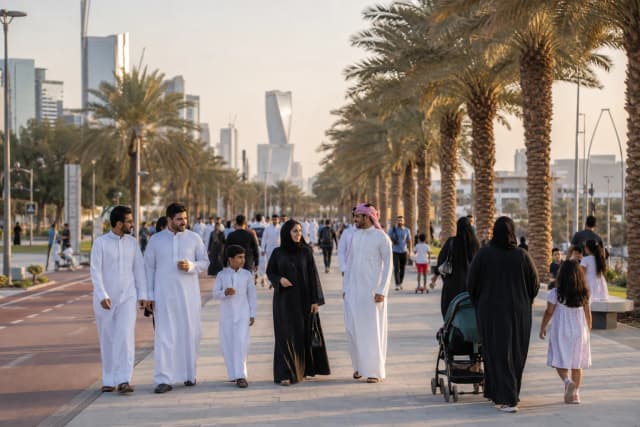
Employer sponsorship is not the only way in. Saudi Arabia's Premium Residency program, widely known as the "Saudi Green Card," lets qualifying individuals live, work, and run a business in the Kingdom without a traditional employer sponsor. It comes in several tiers, including a one-time permanent option and renewable annual options, as well as special categories for investors, entrepreneurs, highly skilled professionals, and property owners. Learn more in our Premium Residency guide.
Once you hold a valid Iqama and meet the required salary and profession criteria, you can sponsor your spouse and children to join you as dependents. This is one of the most common ways families relocate together, and dependents receive their own Iqama linked to yours. Because the exact salary thresholds and eligible job titles change over time, confirm current requirements through Absher and the Ministry before you plan a family move. See our family visa guide for details on bringing dependents.
A major financial draw is that Saudi Arabia levies no personal income tax on salaries, whether you earn through employment or Premium Residency. Combined with common expat benefits such as housing allowances and annual flights, this can make take-home pay significantly higher than in many home countries. Read more about how this works in our guide to whether Saudi Arabia is tax-free.

Vision 2030 has triggered enormous investment across the Kingdom, and international professionals are in demand to help deliver it. Giga-projects such as NEOM, the Red Sea development, Qiddiya, and Diriyah Gate are driving hiring in construction, project management, engineering, architecture, and skilled trades, while the wider economy continues to recruit heavily in healthcare, education, hospitality, and technology.
Healthcare is one of the most reliable sectors for foreign talent, with hospitals and clinics across the Kingdom recruiting doctors, nurses, and allied health professionals from around the world. Technology and finance are expanding fast as Riyadh positions itself as a regional business hub, and multinational companies relocating their regional headquarters to the capital are creating roles in management, IT, and professional services. Oil, gas, and petrochemicals remain a cornerstone of employment, particularly in the Eastern Province.
It is worth understanding Saudization (Nitaqat), the government policy that reserves a growing share of jobs for Saudi nationals. This shapes which roles are open to foreigners, but demand for specialized and senior expertise that is not yet available locally remains strong. Salaries vary widely by sector, seniority, and nationality, so treat any figure you see as indicative and confirm the full package, including allowances, before accepting an offer.
Most expats concentrate in a few key areas: Riyadh for corporate and government-linked roles, Jeddah for trade and tourism on the Red Sea coast, and the Dammam, Khobar, and Dhahran cluster in the Eastern Province for the energy industry. Explore our detailed job search guide for practical strategies on landing a sponsored role, and see our overview of moving to Saudi Arabia for what to expect after you arrive.

Trusted by 55+ million users worldwide
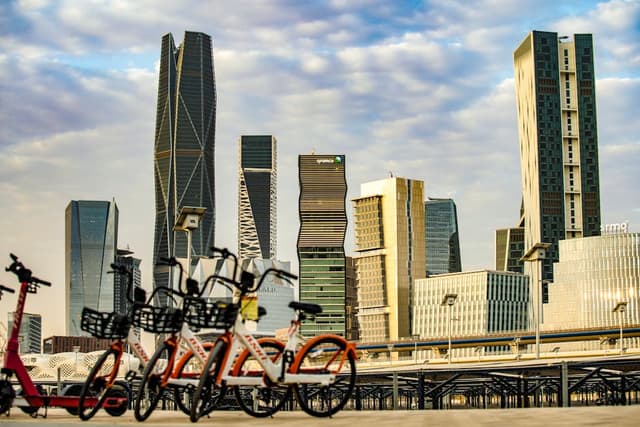
Saudi Arabia offers international professionals a rare combination of high earning potential and rapid change. As the largest economy in the Middle East and a G20 member, the Kingdom is investing hundreds of billions of dollars into new industries, cities, and infrastructure under Vision 2030, creating career opportunities that simply did not exist a decade ago.
The financial case is compelling. With no personal income tax on salaries and expat packages that often include housing, transport, schooling support, and annual flights home, many people find they can save far more than they could in their home country. Employer-provided medical insurance is mandatory, giving families access to modern private hospitals and clinics.
Life for foreigners has also modernized quickly. Women can now drive and work across most sectors, entertainment, concerts, and sporting events have returned, and cities such as Riyadh and Jeddah offer international schools, large shopping districts, and a diverse expat community from every continent. Many services are handled seamlessly through government apps, and the country's central location makes travel to Europe, Africa, and Asia straightforward.
At the same time, Saudi Arabia is a conservative country with its own laws and customs rooted in Islam, and new arrivals should take time to understand local etiquette, dress expectations, and the rhythm of the working week and Ramadan. When you understand how the system works, the sponsorship route to an Iqama is a well-trodden and reliable path. Start with our practical guide to moving to Saudi Arabia to plan your relocation with confidence.